

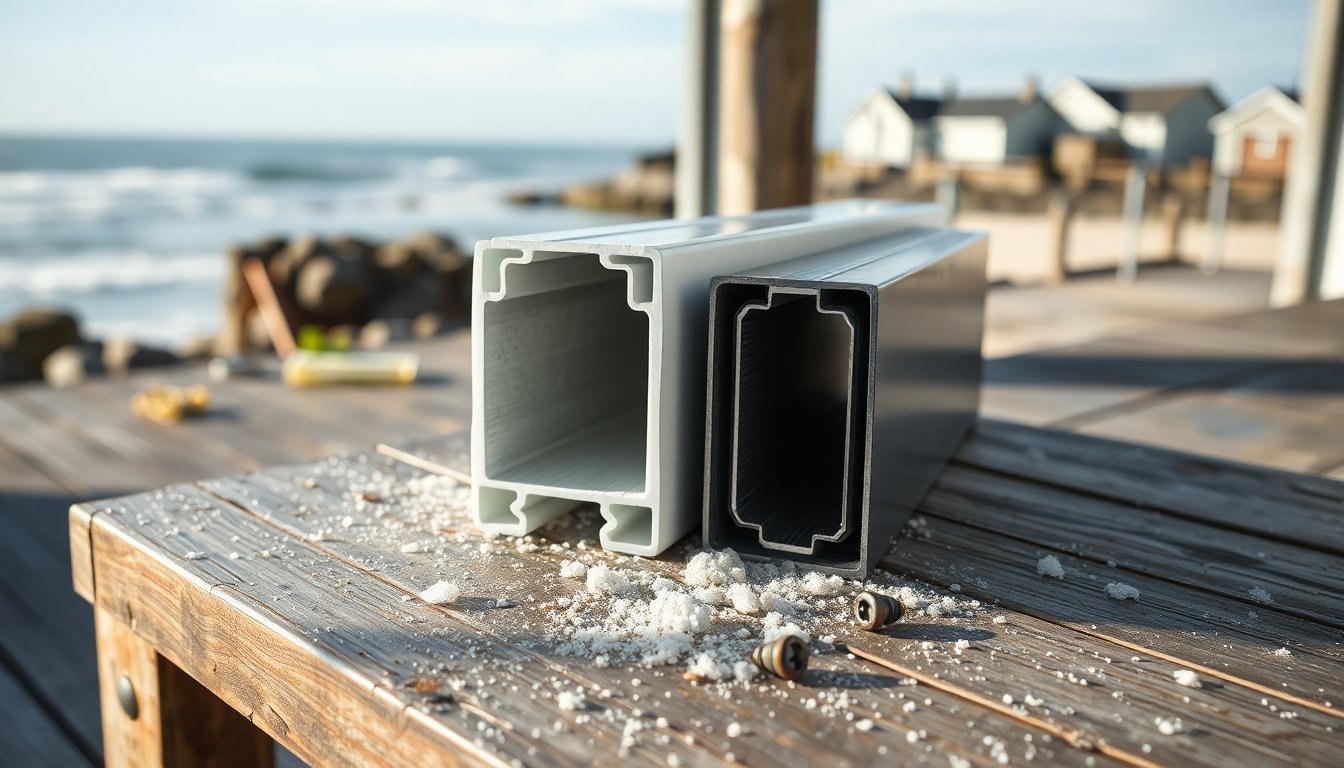
Owning a property near the coast exposes building envelopes to a unique set of stresses: airborne salt, persistent wind and elevated humidity. These conditions accelerate wear on exterior components, with visible effects on frames, gaskets and hardware. The risk is higher for homes used intermittently—such as holiday rentals or second residences—because long idle periods let salt deposits accumulate and small failures grow into larger problems. A well-informed choice of window materials and protective finishes reduces long-term costs and preserves comfort and value.
Before selecting products, it helps to understand the typical failure modes at the coast: metal corrosion, seal degradation and thermal inefficiency caused by conductive frames. Options that combine low susceptibility to salt with good thermal and acoustic performance are preferable. In many seaside contexts the two most practical families of profiles are PVC and aluminum with thermal break. Each addresses the environment differently and comes with trade-offs in appearance, cost and technical limits, so the decision should match the building’s use and owners’ maintenance appetite.
Choosing materials for coastal windows
When you evaluate frame types, prioritize resistance to corrosion, durability of seals and compatibility with high-performance glazing. PVC stands out because its non-metallic surface does not oxidize like iron or untreated steel, and it typically needs minimal painting. Conversely, aluminum with thermal break delivers slimmer profiles and structural strength for large openings, but it must receive appropriate anti-corrosion treatments such as powder coatings and anodizing suited to marine exposure. It is also essential to specify products that carry certifications and finishes designed for a marine climate to ensure long-term performance.
PVC frames
PVC frames are often chosen for seaside properties because they combine low maintenance with strong thermal and acoustic performance when paired with modern double or triple glazing. The plastic surface is easy to clean—regular rinses with fresh water remove salt without damaging the profile—and repainting is rarely required. Quality hinges and locks should be checked at purchase because the profile’s longevity depends on durable hardware and robust gaskets. For intermittently used houses, PVC systems with high-performance insulating chambers are particularly practical and cost-effective.
Aluminum with thermal break
Aluminum with thermal break is ideal for architects and homeowners seeking contemporary lines and large glazed expanses. The thermal break is a non-conductive barrier within the frame that improves energy performance and reduces condensation risk. For coastal use, choose profiles with specialized powder coatings and additional anti-corrosion finishes; this preserves color and surface integrity against salt spray. While aluminum can support wider sliding and folding systems that PVC cannot, expect higher initial costs and insist on marine-grade surface treatments and drainable design details to prevent trapped moisture.
Accessories, maintenance and installation considerations
Beyond the frame material, accessories significantly affect longevity and comfort. Consider solar-control glass to limit summer overheating, integrated mosquito screens for outdoor living comfort and security glazing along with reinforced hardware for unoccupied homes. Installation quality is crucial: correctly flashed and sealed windows prevent water ingress and ensure proper drainage. A maintenance routine of periodic fresh-water rinses, gentle removal of sand and salt, inspection of gaskets and lubrication of moving parts will extend service life and avoid premature replacements.
Security and comfort upgrades
For many coastal properties, simple upgrades pay off quickly. Laminated or tempered security glass and reinforced locking points increase protection for second homes, while insulated glazing with low-emissivity coatings improves comfort year-round. Integrated shading systems or external blinds reduce sun gain and protect finishes. Whatever the selection, document the maintenance needs and choose components that balance durability with the property’s usage pattern.
Practical checklist before buying
When preparing to buy or replace windows for a sea-facing house, evaluate these points: distance to the shoreline, prevailing wind exposure, desired opening sizes, insulation targets, frequency of occupancy and willingness to perform maintenance. Ask suppliers about marine-grade coatings, warranty coverage in coastal environments and certification for thermal performance. Investing in windows and accessories specified for coastal conditions reduces ongoing repairs, preserves the property’s aesthetic and maintains its market value over time.


