

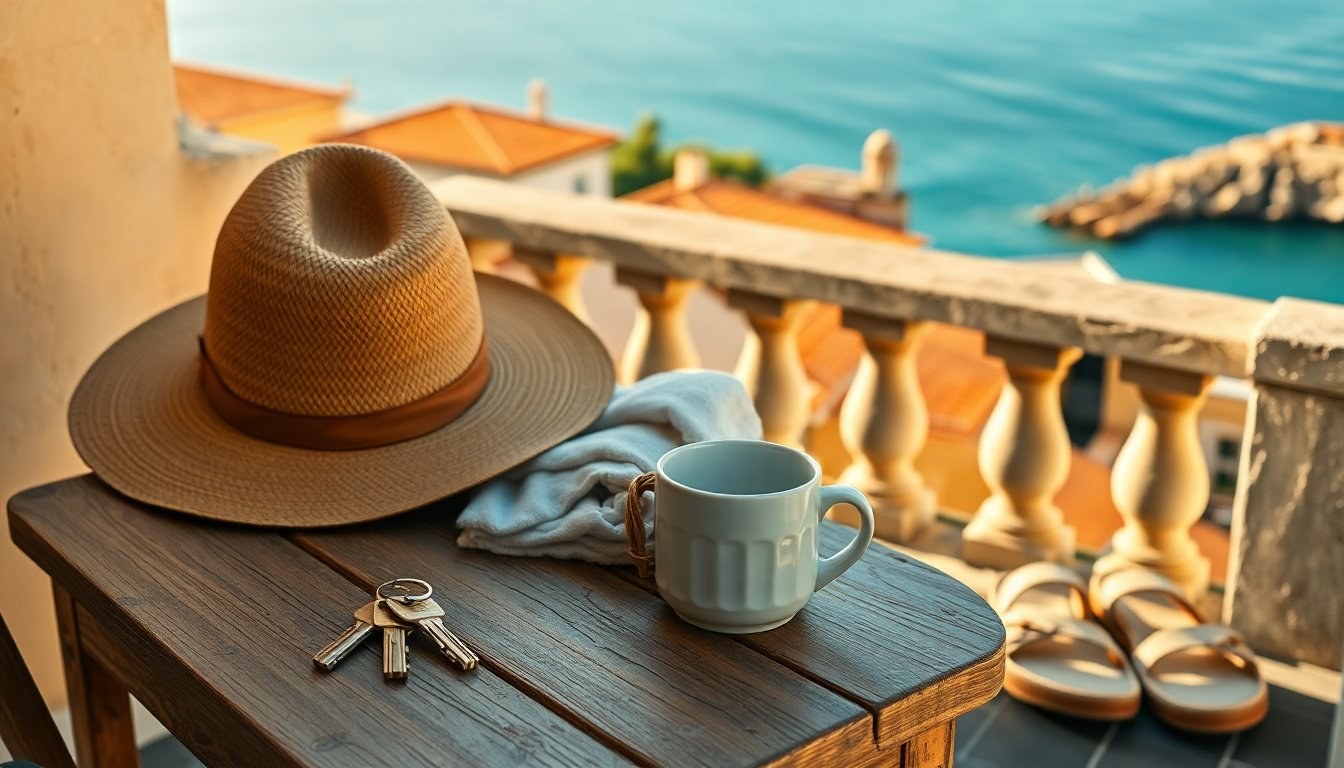
The idea of trading Patagonia panoramas or Scottish stone circles for a familiar seaside terrace may feel like a compromise, but for many it is a deliberate choice. The shift toward using a second home—whether a village apartment, a seaside flat or a countryside cottage—combines pragmatic savings with the comfort of known places. In this context a second home is a property kept in addition to the primary residence and used regularly for leisure or family stays.
Practical reasons sit alongside emotional ones. Travelers who still dream of distant adventures are balancing those desires against the realities of disrupted air services, rising costs and a preference for less risky itineraries. The result is a renewed interest in nearby breaks, often by car or train, and a reappraisal of the benefits of owning or borrowing a family property.
Why families prefer second homes
Cost and flexibility are central. For groups or families, staying in a second home is generally cheaper than booking several hotel rooms or a chain of B&Bs, and it removes the daily constraints of dining schedules and check-in times. Owners also save on transport and service fees when they choose to spend holidays at a property they already maintain. Beyond finances, there is a less tangible advantage: a stay in a familiar place often reduces planning stress and fosters a slower pace of life—qualities that many now prioritize over novelty.
What the market data shows
Reports and hard figures
Recent studies paint a clear picture of the broader tourism market and why second homes are gaining traction. The report by AIDIT Federturismo Confindustria dated 21 April 2026 highlights a contraction in the organized travel sector: 94.3% of agencies recorded lower bookings and 70.3% described the decline as very significant. Those numbers, combined with consumer associations reporting higher costs during holiday periods and concerns about rising jet fuel, help explain why long-haul trips are becoming less common.
Property counts and regional spread
Italy’s stock of holiday properties is substantial. The tax authority counts about 5.5 million homes used as additional residences, while alternative estimates place the figure above 9 million depending on classification. Roughly 26% of homeowners own at least one extra dwelling. Hotspots include the provinces of Rome (215,000), Turin (177,000), Cosenza (126,000) and Lecce (117,000), signaling that both coastlines and inland villages provide the backbone for this trend.
Demand dynamics and local effects
Pressure on availability is emerging. Short holiday windows and local demand spikes—seen during spring holiday micro-surveys—indicate that accommodations near major cities fill faster than last year. Experts note that higher demand can trigger dynamic pricing across services and lodging. As Stefano Zerbi of Codacons warns, when supply is static and demand rises, costs tend to increase. The net effect makes owning or accessing a family property even more attractive for those seeking predictable budgets.
Behavioral shifts and transport choices
Travel patterns are changing: a majority are opting for domestic or nearby destinations—data show about 57.7% choose to vacation in Italy—and substituting car or train travel for planes when possible. While trains and cars bring their own challenges, such as line delays or higher fuel bills, they reduce exposure to flight cancellations and the volatility of international ticketing. This fuels longer, self-contained stays and a preference for resilience tourism, a concept that favors reliable, locally anchored holidays.
What this means for households and destinations
For families, reopening a village flat or countryside cottage often becomes a practical and restorative option: familiar furnishings, older electronics and a lack of five-star frills are forgiven when the goal is rest and reconnection. For smaller towns and rural areas, the renewed use of second homes can support local economies, but it can also increase seasonal pressure on services and prices. The balance will depend on how demand evolves and on policies that help manage peak flows.
Outlook and cultural notes
Beyond economics, cultural currents reinforce the return to local stays: slow travel, village trails and low-impact itineraries are increasingly popular. Pop culture has reflected this mood, with songs and stories celebrating the warmth of hometown returns rather than distant conquests. Ultimately, the rise of second homes as preferred holiday choices is driven by a mix of cost sensitivity, travel uncertainty and a renewed appetite for restorative, close-to-home experiences.


