

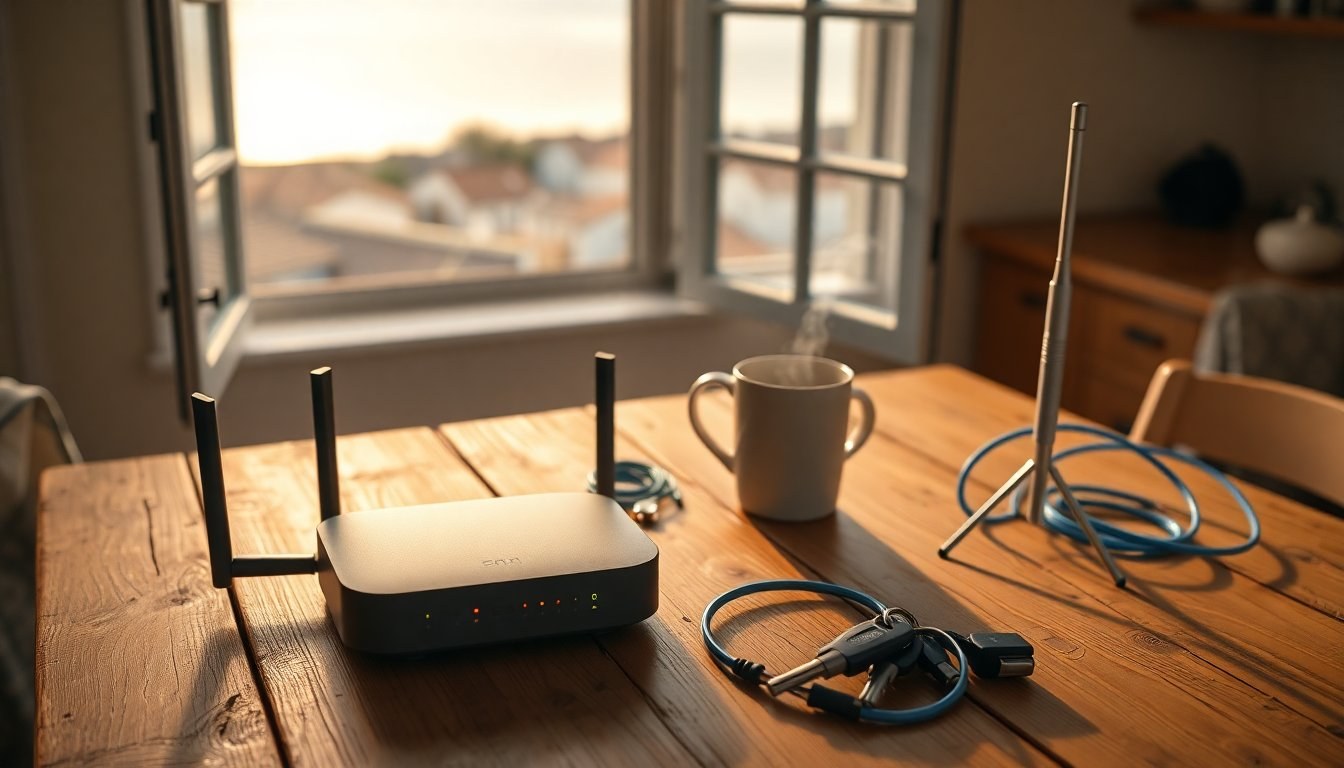
Owning a second home that you occupy roughly sixty days a year changes the calculus for internet service. In holiday towns and small villages, networks often slow down during high season because of congestion, and that can disrupt video calls and streaming. If a satellite option like Starlink is not feasible due to installation limits or local rules, it’s important to assess land-based alternatives that keep costs down while ensuring a minimum, usable level of bandwidth.
Before signing any long contract, confirm which technologies actually reach the property. Many locations advertise FTTC or FTTH, but others are still limited to ADSL or FWA. Use multiple sources to establish real availability and reliability: operator coverage maps, national portals, conversations with neighbors, and, if possible, a professional site check. Keep written evidence such as screenshots or emails so you avoid unpleasant surprises at activation time.
Assessing available infrastructure
Start by mapping out what physically exists at the address and how it performs in practice. The presence of fiber on a map doesn’t always translate to the same experience once the line is activated: the quality of local backhaul, the distance to the cabinet for FTTC, and seasonal traffic patterns can affect real speeds. A measured approach—collecting operator confirmations and on-site measurements—lets you separate an attractive theoretical speed from a consistently usable service. Prioritize service continuity for occasional stays, since a stable medium-speed line often outperforms a high-speed link that collapses under load.
How to check coverage and performance
Use a blend of digital and human checks. Consult operator maps and national coverage tools, then call customer service to request an address-specific verification. Speak with neighbors and local businesses to learn how the network behaves in peak months. When conflicting information appears, gather proof like screenshots or reference numbers and ask for a technical inspection. Perform speed tests during different times of day and at peak periods using a simple portable setup: a laptop, a router, or even a prepaid phone with a data plan. These practical tests give the clearest picture of real-world performance.
Choosing the right solution for occasional use
With reliable coverage information in hand, compare options by price, expected stability, and traffic policies. Fiber (FTTH) is the most robust choice when it’s genuinely present and offers consistent service, but it can be more expensive to install or maintain if you use the property sparingly. FWA and mobile data plans (4G/5G) are often cheaper and faster to deploy, yet they are more likely to suffer from congestion or speed variability. Keep in mind that nominal peak speeds do not guarantee usable throughput during busy periods, so weigh the provider’s real-world behavior, not just advertised numbers.
Hybrid and temporary options
If full fiber is absent or unjustified, consider hybrid arrangements. A portable router with a dedicated 4G or 5G SIM can be ideal for short stays, offering quick setup and no long-term installation costs. FWA often serves as a middle ground between price and stability, but examine the provider’s policies on data caps and traffic shaping. For peace of mind, keep a second mobile SIM or a small data plan as a backup to switch to during congested periods or service interruptions.
Questions to ask and practical next steps
Before committing, get precise, written answers to critical questions: will the operator perform a site-specific check for your address; what are the expected activation times and installation fees; are there any data limits, prioritization rules, or throttling policies during congestion; and do they offer flexible plans for a second home or short-term use, such as TIM Premium Flexy or similar options? If possible, trial the service using a prepaid connection to test performance across different times and during peak season. Keep written confirmations of promises and documented test results to support any future claims.
In summary, the smartest approach for a second home used intermittently is to verify actual coverage, prioritize stable service over headline speed, and plan for a mobile backup. Document the findings, ask detailed questions of providers, and run practical tests in real conditions. This prevents unnecessary expense and ensures you have a dependable connection when you need it most.


