

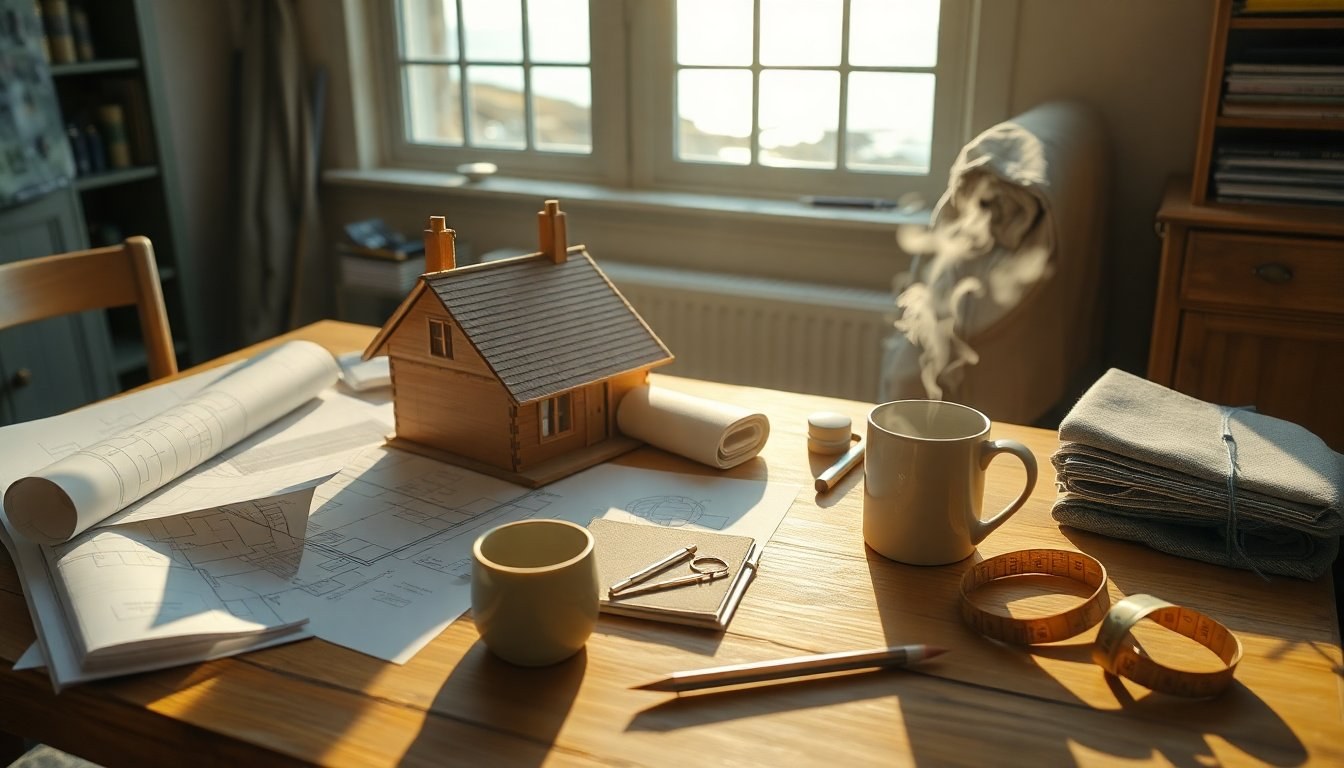
The collection brings together a variety of holiday home projects, including photographs, floor plans and furnishing solutions adapted to seaside, mountain, countryside and historic-centre contexts. These case studies present concrete examples of refurbishments with descriptions of the interventions, estimated costs and proposals for space-saving furniture. The aim is to offer usable references for anyone planning a short-let, second home or renovation that respects the existing building while meeting contemporary needs for comfort and functionality.
Illustrative projects span from modest conversions to more complex restorations: a farmhouse revival that reclaims the attic and preserves brick vaults (27/04/2026), a 35 m² mini-rustic turned into a full dwelling (17/04/2026), and a renovated trullo with 41 m² renewed (04/07/2026). The collection also documents roof additions, a one-euro house project in Sicily (08/07/2026) and interiors that celebrate regional crafts, such as designs in Vietri sul Mare and Sardinia. These examples show how traditional elements and contemporary comfort can coexist.
Design principles for holiday houses
An effective project always starts from two constraints: the building’s morphology and the surrounding landscape. Working with these limits means prioritising local materials and conservation techniques while introducing selective contemporary interventions. Typical strategies include converting underused volumes like attics and adding lightweight mezzanines to preserve structural integrity. The best outcomes balance heritage preservation with modern usability, allowing features such as exposed stone, vaulted ceilings or original timber to become focal points rather than obstacles.
Balancing tradition and modern needs
Projects in coastal and rural settings often use a palette and craft traditions to anchor the interior to place. For coastal properties, a combination of warm white paint and light wood, together with artisanal ceramics, creates an immediate sense of locality—seen in some Sardinian schemes (26/08/2026) and works in Vietri sul Mare (30/06/2026). The design approach favours local craftsmanship and handcrafted finishes while introducing contemporary lighting and hidden storage to meet today’s lifestyle expectations.
Conservation-led restorations and discreet extensions
Conservation is central when dealing with historic fabric: projects like the restoration of a 17th-century farmhouse (casale del ‘600) (27/04/2026) show the importance of consolidating masonry, recovering vaults and transforming the attic into habitable rooms. Where extra space is needed, subtle additions—a modest rooftop volume or a strategic opening—can add about 20 m² or create a new room without overwhelming the original building. Such measures require careful technical detailing and compliance with local regulations, but they deliver additional living space with minimal visual impact.
Small-scale additions that improve liveability
Selective enlargements can turn an underused roof void into a bedroom or a study, as demonstrated by an 85 m² trilocale converted with a mezzanine (29/07/2026). These interventions are often cost-effective alternatives to full extensions: they prioritise lightweight construction, reversible solutions and minimal foundation work. By keeping changes limited and readable, the project retains the property’s character while adding practical square metres that increase rental appeal or family comfort.
Interior strategies, palettes and space solutions
For compact holiday properties, furniture choices and layouts define success. Custom units, multifunctional partitions and suspended furnishings help fit full programmes into 35–50 m², as shown by the 35 m² mini-rustic conversion (17/04/2026) and the 41 m² trullo renovation (04/07/2026). Other documented solutions include a Mediterranean-style one-bedroom (bilocale) refreshed with flexible zoning (25/08/2026) and a 50 m² apartment reworked to include two bedrooms and a second bathroom (27/10/2026). Thoughtful lighting and mirrors also play an important role in visually enlarging rooms.
Colour and material choices shape atmosphere: warm whites and pale wood are recurrent for island and coastal houses, while accent colours—yellows and greens used in a 63 m² refresh (01/07/2026)—offer a rapid identity shift without structural changes. Ceramic details and local artefacts connect interiors to place, delivering a sense of authenticity that guests appreciate. Ultimately, the combination of functional planning and site-specific decoration yields holiday homes that feel both rooted and modern.
From inspiration to action
Before starting work gather existing plans, take comprehensive photographs and set clear functional priorities—more bedrooms, improved energy efficiency or conservative restoration. Obtain multiple quotes and itemised cost estimates for materials and labour so choices can be aligned with budget and sustainability goals. Referencing real projects documented here provides realistic benchmarks: the mini-rustic (17/04/2026) offers space-saving ideas, the trullo (04/07/2026) shows clever use of niches, and the casale restoration (27/04/2026) illustrates conservation techniques. These models help you adapt proven solutions to the unique character of your property.


