

The travel market clearly favors greener choices: a growing share of guests seek accommodations that reduce environmental impact. If you run a vacation rental or a holiday home, adopting sustainability measures can be both a market differentiator and a way to cut operating costs. In this piece we explain simple, practical interventions and the logic behind them, combining low-cost fixes with longer-term investments so that hosts can prioritize actions that return value quickly while building credibility with future guests. The word sustainability here means managing resources to lower environmental footprint without compromising guest comfort.
Turning greener intentions into measurable outcomes requires three linked strands: technical upgrades, responsible purchasing and clear communication. Technical work improves energy efficiency and reduces bills; smarter procurement cuts waste; and transparent messages increase trust and bookings. Many of the recommended steps are reversible or incremental, so you can start small and scale up. For certification-minded owners, documented choices simplify later applications for labels such as Green Key or Ecolabel. Throughout the guide we use energy performance certificate (EPC) as the reference for the building’s baseline assessment.
Why investing in green upgrades pays off
Adopting sustainable practices is a commercial decision as much as an ethical one. Listings that highlight reduced consumption, renewable sources and waste reduction typically see higher engagement and repeat bookings. Practical benefits include lower utility bills, decreased spending on disposables and often reduced maintenance demands because systems run more efficiently. Additionally, documented sustainability opens the door to public incentives or local grants aimed at energy-efficient buildings. Even without a formal label, publishing consumption metrics and maintenance logs builds credibility. Use energy efficiency figures and guest-facing data to demonstrate impact and convert eco-aware searches into reservations.
Actionable measures for holiday homes
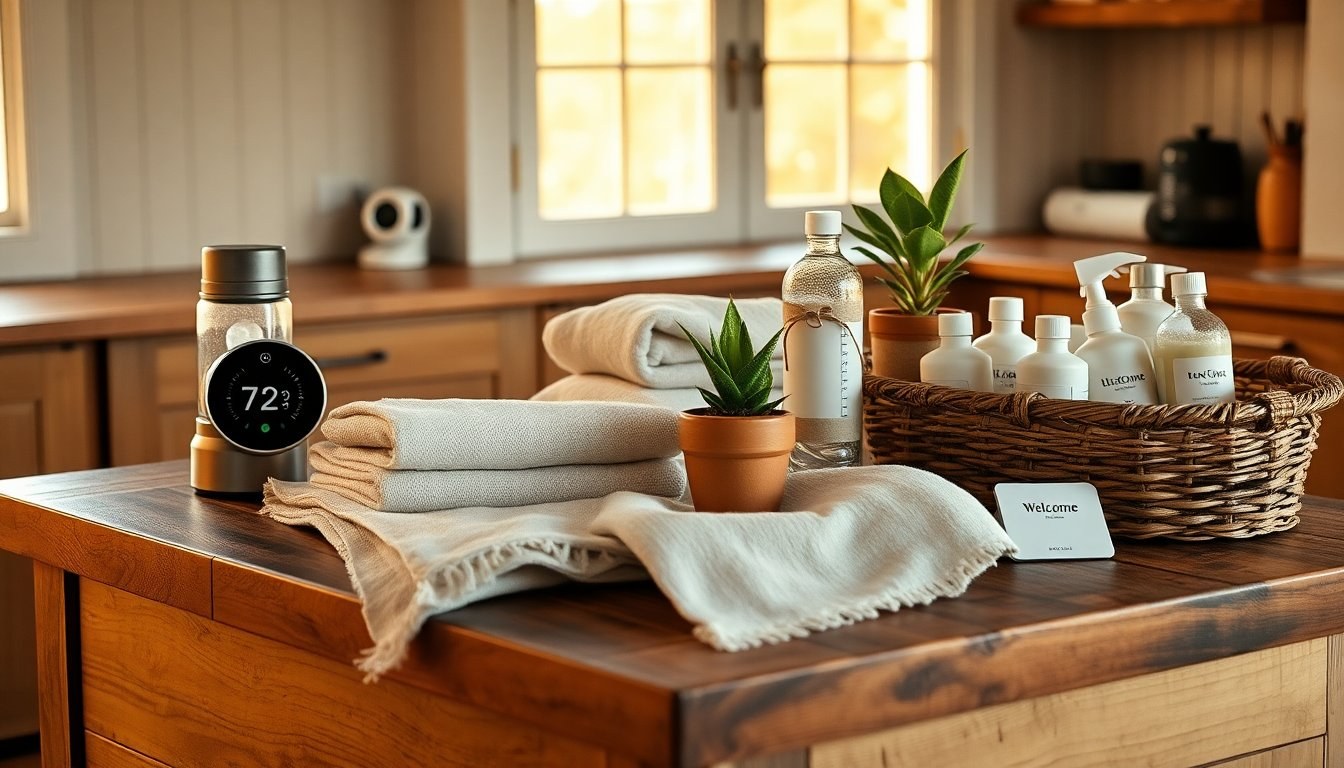
Start with high-impact, low-cost fixes: replace incandescent and halogen lights with LED bulbs, fit a smart or programmable thermostat, and switch bathroom and kitchen dispensers to refillable containers to cut single-use plastics. If you own the property, evaluate insulation upgrades, double glazing and the addition of solar panels to reduce dependency on grid energy. For planning, consult the energy performance certificate (EPC) to identify the most effective interventions. Small maintenance routines—such as checking seals and servicing boilers—also prevent losses and keep systems operating efficiently over time.
Energy and systems
Energy choices usually deliver the fastest returns. Alongside LED lighting and thermostats, consider timed controls for hot water and appliances based on occupancy patterns to avoid unnecessary use. When feasible, add solar panels or choose renewable energy suppliers to lower running costs and reduce carbon emissions. Improving windows, doors and insulation will cut heating and cooling demand and improve guest comfort. Communicate these upgrades clearly in your listing and house guide so guests understand your approach and feel encouraged to follow energy-saving tips during their stay.
Water, cleaning and waste management
Short stays often mean higher water and waste volumes due to frequent changeovers. Fit low-flow showerheads, aerators and dual-flush toilets to reduce consumption without affecting user comfort, and replace single-use toiletries with refillable dispensers. Choose certified cleaning products such as those carrying the Ecolabel mark to balance performance with lower environmental impact. Organize recycling with clearly labeled bins and a short multilingual guide for guests to reduce contamination and increase participation. These steps cut costs, lower the amount of waste sent to landfill and improve the overall guest perception of your property.
Communication, certification and management tools
How you present your efforts matters: transparent, specific descriptions avoid the trap of greenwashing and help guests make informed choices. Use platform filters to flag sustainability features and include a short section in the house manual listing concrete measures and how guests can help. If you want formal recognition, certifications like Green Key and Ecolabel for tourism enhance credibility and visibility. Finally, adopt simple property management tools to monitor consumption, automate guest messages about sustainable practices and track the savings generated by each upgrade. A phased approach—starting with low-cost wins, documenting outcomes and reinvesting savings—creates a durable, marketable green offering.


