

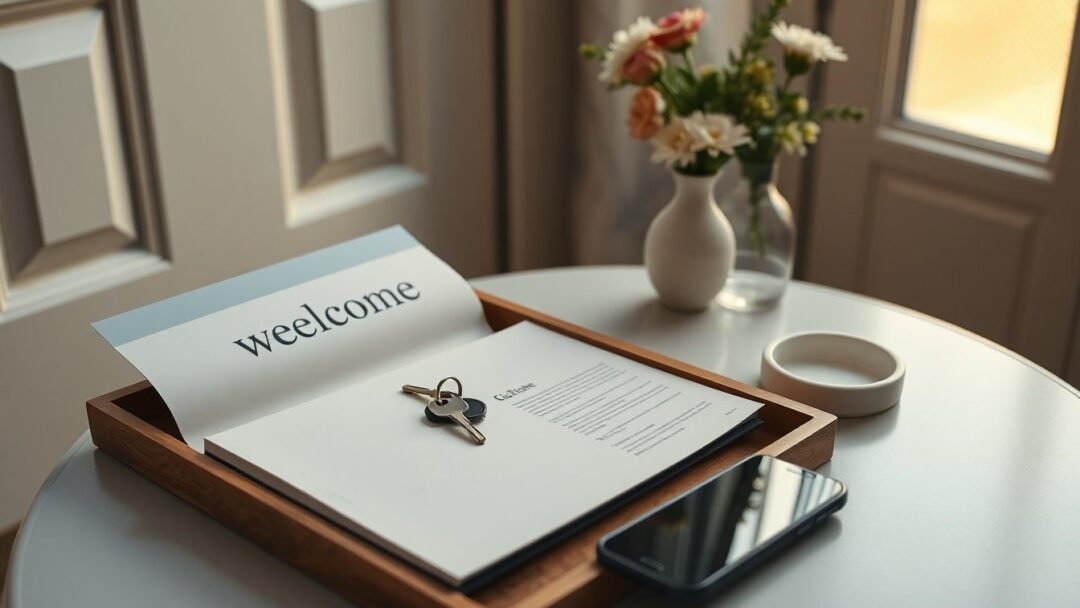
The first impression after a long journey often sets the tone for the entire stay. A well-prepared welcome book is more than a courtesy: it is a practical tool that eases guest arrival, clarifies expectations and cuts down on repetitive messages. Think of it as a compact house manual that answers the questions guests are most likely to ask, from how to connect to the Wi‑Fi to where to park, so you get fewer late-night calls and more relaxed visitors.
This article explains how to assemble a usable, professional-looking guide—whether you prefer a printed booklet, a PDF or an interactive page—so guests feel informed and hosts save time. You will find a recommended structure, alternatives for delivery, and practical tips on tools and automation to integrate the guide with booking platforms like Airbnb and Lodgify. The goal is practical: reduce friction, protect your property and encourage repeat stays.
Why a thoughtful welcome book matters
A succinct, clear welcome book produces measurable benefits. Guests who understand house rules and emergency procedures behave more predictably and leave better reviews. A guide that highlights local favorites and honest recommendations signals that you are a considerate host and increases the chances of return bookings and referrals. From a workflow perspective, a single well-structured document replaces dozens of identical messages and saves time for every follow-up inquiry.
Core sections to include
Arrival, check-in and house rules
Begin with a warm, personal greeting that uses the guest’s name when possible and briefly describes the property’s character. Provide clear practical details: full address, directions, parking instructions and precise check-in/check-out times. Explain access methods such as a smart lock, key box or concierge, and include step-by-step instructions that remove uncertainty. Summarize the most important house rules—no smoking, pet policy, noise hours and waste sorting—phrased politely so rules feel like helpful guidance rather than strict orders.
Appliances, emergencies and local recommendations
Dedicate a section to appliances with simple operational steps for the heating, air conditioning, oven and dishwasher. For activities that might confuse guests, add a QR code linking to a short demonstration video and label the manual with checks like “leave dishwasher empty” to reduce mistakes. Include emergency contacts (police, medical, plumber) and a short procedure for incidents such as power loss or water leaks. Finish this section with curated local tips—favorite cafés, practical supermarkets and useful transit links—to make the stay feel curated and authentic.
Format, tools and distribution
Decide whether to offer a printed copy, a digital file or both. Many hosts combine an advance PDF sent before arrival with a printed leaflet or a laminated card left in the property containing essential instructions and a QR code to the full guide. For production, choose the tool that fits your skills: use Canva for a polished layout, Google Docs for quick collaborative editing or Notion for an interactive, searchable manual. Store the final file on a cloud service such as Drive or Dropbox and attach the link to confirmation messages sent through booking platforms.
Workflow and maintenance
Create a reusable template and customize it per booking to add personal touches like guest names or seasonal notes. Automate sending the file with pre‑arrival messages from your PMS or through integrations with platforms like Lodgify and Airbnb. Track recurring questions and update the guide when the same issues appear—this iterative approach transforms the welcome book into a living document that becomes more efficient over time. Periodic reviews also help keep restaurant and service recommendations accurate.
Putting it into practice
You do not need perfect design to start: cover the essentials first and enhance visuals later. Short, clear sentences, bold labels and helpful photos will guide guests better than long paragraphs. Test the guide with friends or early guests, collect feedback and refine. Over time, the effort will reduce urgent calls, minimize accidental damage and lead to improved ratings—making the welcome book one of the most effective tools in a host’s toolkit.


