

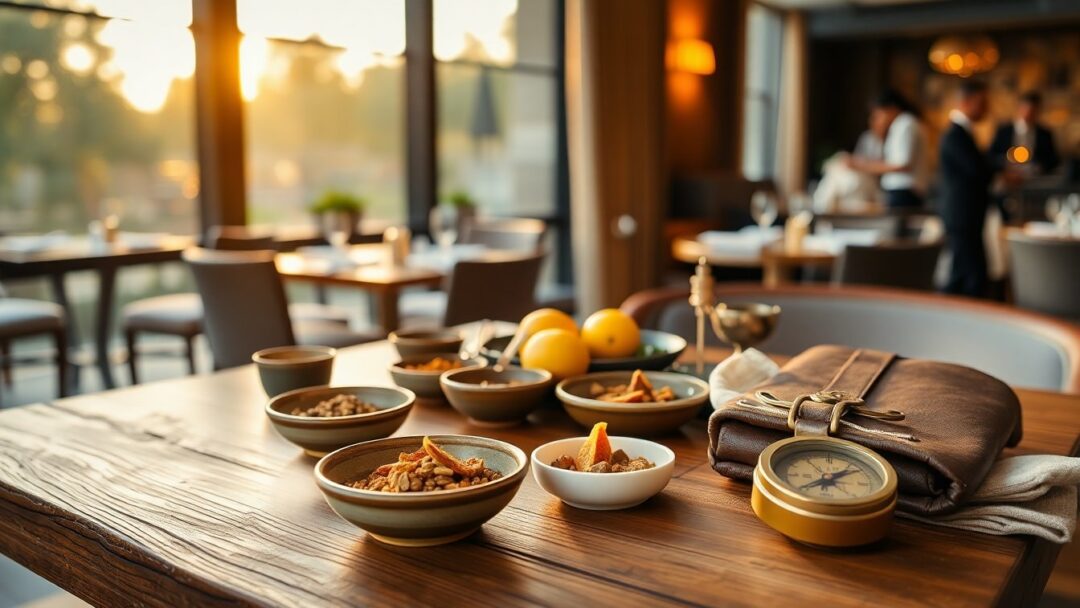
Carola Rovati directs the Giacomo Milano group with a clear conviction: travel is not merely leisure but a continuous source of professional and personal transformation. The brand, established in 1958, functions as a testing ground where tastes, gestures and spatial ideas gathered abroad are reinterpreted to shape a distinctive concept of hospitality. For Rovati, journeys supply both concrete techniques and imaginative motifs that inform menu development, dining rituals and the way staff relate to guests.
The company’s ethical stance places relationships at the center of success. Conversations between front and back of house, attention to communal ties and the design of interiors are seen as business-critical factors. This perspective treats profitability as an outcome of resilient human systems, not only of capital input. In practice, Giacomo Milano’s leadership measures value through the quality of internal bonds and long-term sustainability rather than through short-term financial metrics alone.
Travel as a framework for culinary and spatial choices
Rovati frames her work around the idea that different territories teach different lessons: Mexico, Japan and California each contribute a vocabulary of flavors, textures and service gestures. She often cites Tetetlán in Mexico City for its layered cultural context and the Casa Pedregal by Luis Barragán as an example of how architecture can shape atmosphere. In Los Angeles she points to Gjelina for its relaxed balance between Californian produce and Mediterranean notes, with the wood-fired oven adding an unmistakable smoky signature. In Tokyo the precision of Ginza Kyubey embodies the elevated intimacy of counter service and the omakase tradition, where trust in the chef becomes the defining experience.
People-first leadership and sustainable practice
Enlightened hospitality as operating principle
At the core of Giacomo Milano’s strategy is a people-centered philosophy inspired by the American restaurateur Danny Meyer. Rovati adopts enlightened hospitality as a guiding principle, prioritizing employee welfare as a prerequisite for guest satisfaction. This translates into investments in training, attentive management and workplace environments designed to support wellbeing. Giampaolo Grossi, the group’s CEO, labels the resulting culture gentle hospitality, a promise that runs through hiring, mentoring and everyday service standards.
From values to everyday decisions
Implementing a humanistic model requires concrete choices: programs to develop staff skills, layouts that reduce stress during service, and practices that reward loyalty and craftsmanship. The philosophy reframes sustainability as a holistic practice—one that includes social capital and working conditions alongside environmental concerns. When team members feel supported, front-of-house interactions become more authentic and the guest experience grows in consistency and depth, producing repeat customers and stronger community ties.
Rituals, places and sensory memory
Architecture and the sensorial restaurant
Rovati treats restaurants as narratives where architecture, materials and scent are as important as taste. The lessons drawn from Barragán’s work, the warmth of a wood-fired oven in California and the ritualized counter of Tokyo inform how dining rooms are lit, surfaced and arranged. Sensory coherence—light, texture, aroma—creates a memory that customers carry home, making the physical setting an active ingredient in brand identity. These design choices are intentionally selected to echo the cultural references discovered during travels.
Rituals, pilgrimages and the menu
Beyond buildings and kitchens, rites and landscapes leave deep marks on Rovati’s imagination. She describes Mexico as a second home where ancestral practices and contemporary renewal meet; a recurring ritual she participates in is the Mexica ceremonial dance near Amecameca, at the feet of the Iztaccíhuatl and Popocatépetl volcanoes. Pilgrimages to Tamil Nadu and Sri Lanka exposed her to devotional song, incense and local condiments—she recalls a coconut chutney at Sparsa Thiruvannamalai that reframed her understanding of simplicity and spice. Mountain treks such as a two-week route around Annapurna II offered moments of reflection and energy that she channels into attentive service and menu humility. Intimate stays, like Ca’ P’a Casa Privata in Praiano, remind her that slow luxury and personal scale also shape guest expectations.
In sum, travel operates for Rovati as both a repository of practical techniques and a continual source of wonder. By combining a staff-centered management model with lessons from architecture, regional cooking and ritual, Giacomo Milano aims to offer a hospitality that is sustainable, sensory and rooted in human relationships. The result is a company where global inspirations are remade into local care and consistent service.


