When the idea of a vacation rental moves beyond conventional cottages or beach apartments, it often lands in places steeped in history or surprise. Recent developments show three very different examples: a former Royal Air Force control tower in County Down, a deliberately fraudulent listing for 10 Downing Street, and a meticulously designed lake-front home in Minnesota. Together they illustrate how the holiday home market is embracing novelty, testing platform safety, and redefining interior style.
Each story, while distinct, shares a common thread: the transformation of a space—whether real or imagined—into a destination that promises a unique stay.
RAF Bishops Court tower seeks a new lease as a two-bed holiday let
Set amid the rolling fields six miles south-east of Downpatrick, the former RAF Bishops Court control tower dates back to 1943. Built as a combat crew replacement centre for the US Air Force, it quickly became a training hub for British pilots during the Second World War. After the war the site served as a Cold-War radar station, known as ‘Ulster Radar’, scanning the Atlantic for military traffic while also handling civilian air-traffic control.
Now, a planning application submitted by a Wiltshire-based applicant, represented by Belfast-based consultants CMP Planning and Design, proposes to convert the concrete structure into a “two-bed self-catering holiday let”. The plan also includes a detached garage, landscaped gardens and designated parking. The entire plot, just under half an acre, is currently grass-covered with the tower occupying one corner. The property was recently listed for £80,000, with estate agents describing it as a “perfect opportunity to create something truly special in a picturesque setting”. If approved, guests could stay inside a piece of wartime heritage while enjoying modern amenities.
’s fake 10 Downing Street listing exposes security gaps
In an investigative test, Which? Travel’s editor set up a deliberately false listing on that advertised the UK Prime Minister’s official residence as a “1 bedroom apartment in the heart of London”. The headline even displayed the iconic front door of 10 Downing Street. No ownership documents or personal identification were required during the initial registration; the platform allowed the listing to go live within fifteen minutes.
Within twenty minutes, fourteen enquiries arrived, illustrating how easily a fraudulent holiday offer can attract interest. The editor proceeded to book a week’s stay, only to discover that ’s internal checks did not flag the absurdity. It took the platform twenty-two months to request photo ID and a National Insurance number, after which the listing was finally removed. The incident coincided with the 2024 Platform Operators (Due Diligence and Reporting Requirements) Regulations, which mandate stricter verification to ensure tax compliance, but the lag revealed a substantial loophole.
The editor also highlighted that ’s messaging system allowed the host to send external URLs, a capability rarely seen on rival platforms. This opened the door for potential phishing attacks, as past scammers have used the same feature to lure travellers to fraudulent sites. Although the platform claims to employ AI to detect fraud, the AI failed to recognize the unmistakable image of 10 Downing Street, underscoring the need for more robust automated monitoring.
Lake-front designer retreat demonstrates modern holiday-home aesthetics
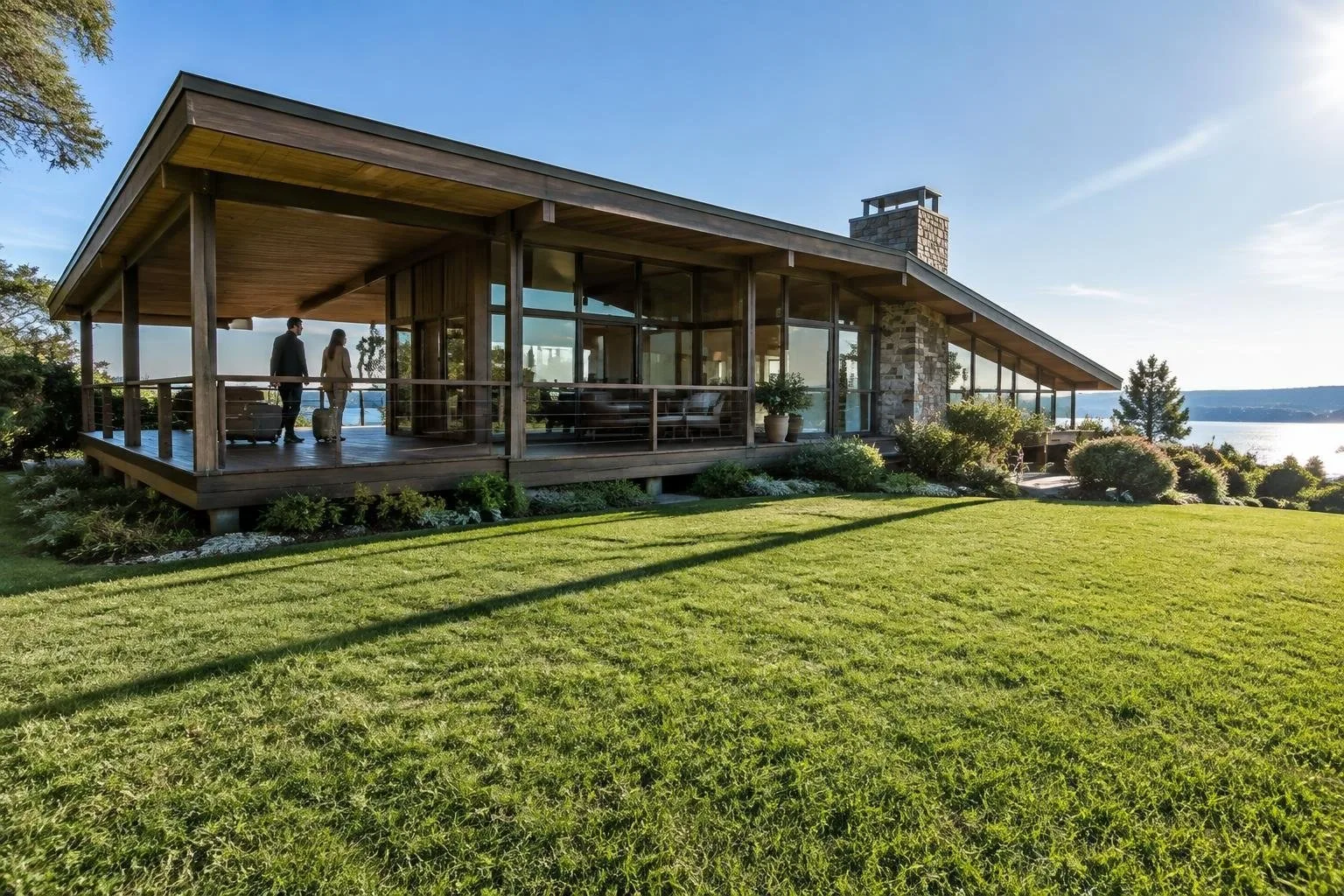
Designer Gabe Lindberg of O’Hara Interiors recently completed a 3,300-square-foot lake house on the shores of Lake Minnetonka. The project, built with Thompson Construction, blends a light-filled modern aesthetic with subtle Old World touches such as leaded-glass windows and reclaimed barn-wood arches. The four-bedroom, 3½-bath residence was re-imagined during the pandemic when the owners, Gabe and his husband Mark, required more private space for remote work and for hosting extended family.
Key design elements include custom beaded cabinetry, a Venetian plaster hood over an Italian Ilve range, and a cast-stone fireplace that mirrors the kitchen’s hood finish. The dining area, described as a “treehouse” because of its proximity to a towering oak, features a Moroccan-inspired reclaimed-wood arch and a Visual Comfort chandelier. Seasonal décor leans heavily on natural greenery—fresh Norfolk pine, dried oranges and bottlebrush trees—creating a festive atmosphere without excessive glitter.
For guests, the home offers a blend of comfort and activity: a mudroom with lockers for winter gear, a primary suite with marble waterfall-edge vanities and lake views, and a sprawling yard that accommodates fire pits for late-night gatherings. The design philosophy prioritises “warmth and greenery” over opulent ornamentation, proving that a holiday home can be both stylish and welcoming throughout the year.
These three cases—heritage conversion, platform testing, and high-end design—show how the holiday-rental market is expanding its horizons. Whether it’s sleeping in a historic radar tower, learning from a booking-platform glitch, or admiring a meticulously curated lake retreat, travellers now have a broader palette of experiences to choose from.