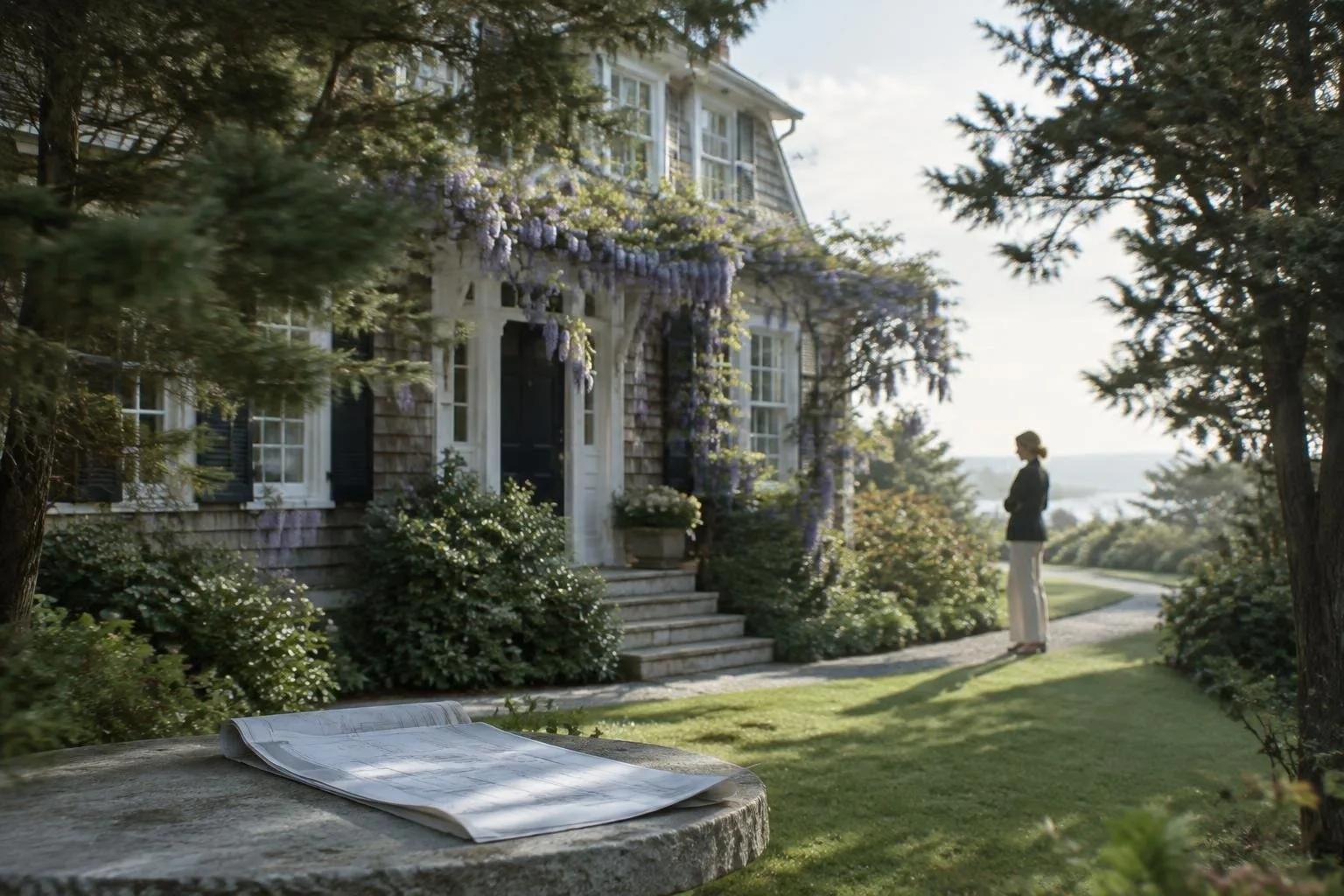
William Raveis Nantucket, one of the island’s largest brokerages, faced a six-figure judgment after a Norfolk Superior Court jury concluded that its agent had lied about the development potential of a home on Polpis Road. The case began in 2020 when Mary Murray and Jeffrey Ment, a Connecticut family with six children, signed for a two-bedroom house priced at $1.45 million. The couple relied on assurances from agent Melanie Gowen that the structure could be doubled in size to accommodate their growing household.
The promise of expansion turned out to be untenable. Misrepresentation in real-estate law occurs when a seller or agent provides false information that influences a buyer’s decision. In this instance, local deed restrictions and zoning ordinances explicitly barred any addition beyond the existing footprint. Murray and Ment later testified that they never questioned Gowen’s claim because she said she had consulted the building department, a statement the buyers took at face value.
Purchase and alleged misrepresentation
The Polpis Road property, located at 151 Polpis Road, was marketed as a flexible base that could be enlarged to suit a family of eight. Gowen’s verbal guarantee that the home could be “doubled” formed a key part of the couple’s decision-making process. After the sale closed, the buyers discovered a recorded deed restriction that limited the structure to two bedrooms because of septic system constraints. When they approached the brokerage for a remedy, the firm reportedly told them “there’s nothing we can do,” prompting the Murray-Ment family to file a lawsuit in 2021.
During the pre-trial phase, the plaintiffs received a copy of the restrictive covenant eleven days before closing and had two attorneys review it. They attempted to negotiate a waiver with the sellers, who refused. The couple ultimately sold the house in 2021 for $1.95 million, realizing a gross gain that they later estimated at roughly $125,000 after accounting for mortgages, improvements, and fees.
Trial, verdict and damages
The trial, which stretched over five years, culminated in a January 2026 jury verdict and an amended judgment in June 2026. The jury assigned 65 % of the liability to Gowen’s negligence and the remaining 35 % to the plaintiffs for insufficient due-diligence. The total judgment amounted to $1,280,886, of which $867,000 represented double damages for the deceptive conduct. The balance covered attorneys’ fees, interest, and other ancillary costs.
Judge Ira Gant of the Norfolk Superior Court affirmed the jury’s findings, and the amount will continue to accrue interest until fully satisfied. Both William Raveis and Gowen filed a notice of appeal in October 2026, maintaining that no duty was breached and that the buyers had been aware of the restriction prior to closing.
Aftermath and industry impact
Beyond the monetary award, the case has resonated throughout the island’s luxury-market community. Murray and Ment later purchased a $3 million home on Gardener Road, a price far above their original budget, after the Nantucket market surged. Their experience underscores the importance of independent verification of zoning and deed restrictions, especially in markets where “shortcut” representations can lead to costly litigation.
William Raveis’ spokesperson emphasized the firm’s 50-year reputation for professionalism, asserting that the appeal will demonstrate “no actionable misrepresentation.” Nonetheless, industry observers note that the judgment serves as a cautionary tale: agents who make unfounded expansion claims risk not only civil penalties but also lasting damage to their credibility.
For prospective buyers, the case reinforces the need to request written confirmation of any development claims and to engage a qualified surveyor or attorney before signing. The combination of a substantial judgment, a high-profile appeal, and the public record of the dispute is likely to shape how Nantucket brokers present property potential in the years ahead.