

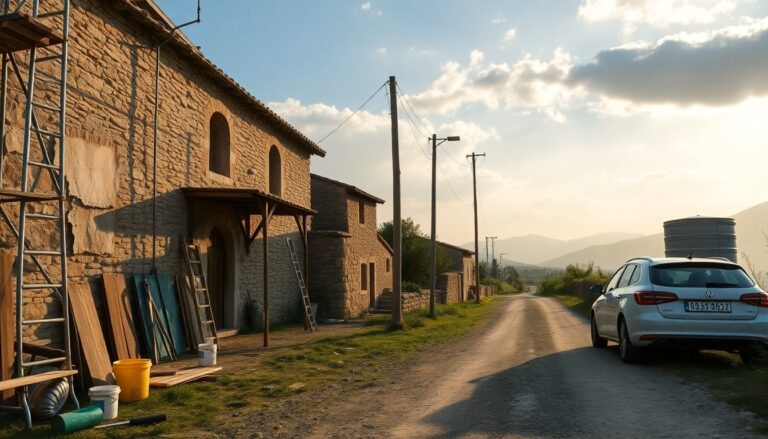
Valtaro’s old stone houses are drawing renewed attention. Recent files and local reports show more buyers are hunting second homes in the Parma Apennines, attracted by durable masonry, regional character and the promise of a distinctive lifestyle away from coasts and cities. Yet charm
alone won’t carry a project to success: accessibility, utilities and the price of careful restoration are the real deal-breakers. What follows distills the evidence we reviewed, explains how typical restorations proceed, identifies the key players, and flags the practical trade-offs anyone considering a Valtaro property should know.
What the records show
– Traditional fabric dominates. Surveys repeatedly document thick stone walls, timber beams and
heavy roof slabs (ciappe) or clay tiles on mixed timber trusses. These elements give the houses thermal inertia, acoustic comfort and a look buyers prize.
– Maintenance gaps are common. Many properties display original masonry with deferred attention to services: outdated wiring, aging plumbing and patchy insulation recur in technical reports.
– Outbuildings matter. Barns, cellars and former stables frequently appear in listings as convertible opportunities for guest suites,
workshops or small hospitality units—but conversions require their own surveys and often separate permit routes.
– Location shapes demand. Travel times—roughly an hour to Parma and around 90 minutes to Milan or Bologna, with the Ligurian and Tuscan coasts slightly over an hour—make Valtaro attractive for weekend stays. That closeness encourages buyers who want quick escapes, not remote seclusion.
How restorations typically unfold
Restorations in Valtaro tend to follow a sensible sequence:
1. Technical survey and heritage assessment. Foundations, visible damp, roof condition and any existing seismic or cadastral documentation are checked first.
2. Weatherproofing and structural stabilization. Masonry repointing, roof repairs or refitting ciappe come next to stop water ingress and secure the shell.
3. Services upgrade. Electrical, plumbing and heating systems are replaced or modernized—often adapted to mountain conditions and energy-efficiency goals.
4. Finishes and sympathetic insulation. Internal insulation strategies and breathable mortars (lime-based rather than cement) are favored to protect the historic fabric while improving comfort.
Timelines are flexible. Cosmetic work can be wrapped in months; full conservation-led refurbishments, especially those requiring seismic strengthening or complex permit processes, can exceed a year. Phased approaches often make sense: they spread cost, address urgent risks first and preserve character.
Who makes projects work
A small, specialist ecosystem underpins successful projects:
– Local stonemasons and carpenters who know traditional techniques.
– Conservation-minded architects who translate heritage requirements into practical specifications.
– Structural engineers and qualified surveyors who validate interventions.
– Municipal technical offices and regional heritage authorities that set permit conditions.
– Estate agents, niche brokers and local rental managers who understand market positioning.
Files consistently show that teams combining a registered architect, certified structural engineer and experienced local builder reduce surprises and speed approvals.
Financial and practical trade-offs
Choosing a Valtaro property shifts the investment equation toward long-term upkeep and regulatory compliance. Buyers gain lower purchase prices and strong place identity, but face higher logistics costs for specialist labor and materials, seasonal access constraints and sometimes limited utility connections. Common pitfalls include:
– Underestimating specialist costs. Traditional masonry and timber repair demand skilled craftsmen and often cost more than generic work.
– Overlooking permit constraints. Heritage and landscape protections can limit expansions or conversions, affecting business models like agritourism.
– Relying on cosmetic checks. Surface renovations can mask deferred structural or services problems that balloon budgets.
The upside is that properties restored with documented, conservation-friendly methods usually command premiums, attract steadier occupancy and are easier to market—particularly to buyers who value authenticity.
Converting ancillary buildings
Barns, cellars and stables offer big potential but require care. Successful conversions begin with separate structural and heritage surveys, conservation-led design briefs and reversible, minimal-impact service installations. Projects that retain beams, stone patterns and original openings while inserting discreet wet cores tend to preserve character and fetch higher valuations. Early engagement with conservation architects and pre-application consultations with authorities reduce approval delays.
Location, lifestyle and market dynamics
Valtaro’s appeal blends accessibility with village life and outdoor recreation. Records and listings repeatedly mention proximity to trails, markets and regional gastronomy as selling points. This dual appeal brings a mixed clientele—urban professionals seeking weekend retreats, families looking for coastal access, and investors chasing short-stay rentals. It also creates pressure: seasonal visitor spikes demand adaptable services, and short-stay conversions can change rental markets and village rhythms. Municipalities face the challenge of protecting natural corridors while scaling services to suit a semi-transient population.
Practical steps for buyers
The documents point to a clear due-diligence checklist:
– Commission thorough technical surveys (foundations, roof, structural elements).
– Verify cadastral and ownership records; confirm planning and heritage constraints.
– Obtain written confirmations for water, sewage and power connections.
– Prepare conservation-aware designs that favor breathable materials and internal insulation where appropriate.
– Build phased budgets with contingencies and secure conditional authorizations for conversions when relevant.
What the records show
– Traditional fabric dominates. Surveys repeatedly document thick stone walls, timber beams and heavy roof slabs (ciappe) or clay tiles on mixed timber trusses. These elements give the houses thermal inertia, acoustic comfort and a look buyers prize.
– Maintenance gaps are common. Many properties display original masonry with deferred attention to services: outdated wiring, aging plumbing and patchy insulation recur in technical reports.
– Outbuildings matter. Barns, cellars and former stables frequently appear in listings as convertible opportunities for guest suites, workshops or small hospitality units—but conversions require their own surveys and often separate permit routes.
– Location shapes demand. Travel times—roughly an hour to Parma and around 90 minutes to Milan or Bologna, with the Ligurian and Tuscan coasts slightly over an hour—make Valtaro attractive for weekend stays. That closeness encourages buyers who want quick escapes, not remote seclusion.0
What the records show
– Traditional fabric dominates. Surveys repeatedly document thick stone walls, timber beams and heavy roof slabs (ciappe) or clay tiles on mixed timber trusses. These elements give the houses thermal inertia, acoustic comfort and a look buyers prize.
– Maintenance gaps are common. Many properties display original masonry with deferred attention to services: outdated wiring, aging plumbing and patchy insulation recur in technical reports.
– Outbuildings matter. Barns, cellars and former stables frequently appear in listings as convertible opportunities for guest suites, workshops or small hospitality units—but conversions require their own surveys and often separate permit routes.
– Location shapes demand. Travel times—roughly an hour to Parma and around 90 minutes to Milan or Bologna, with the Ligurian and Tuscan coasts slightly over an hour—make Valtaro attractive for weekend stays. That closeness encourages buyers who want quick escapes, not remote seclusion.1