

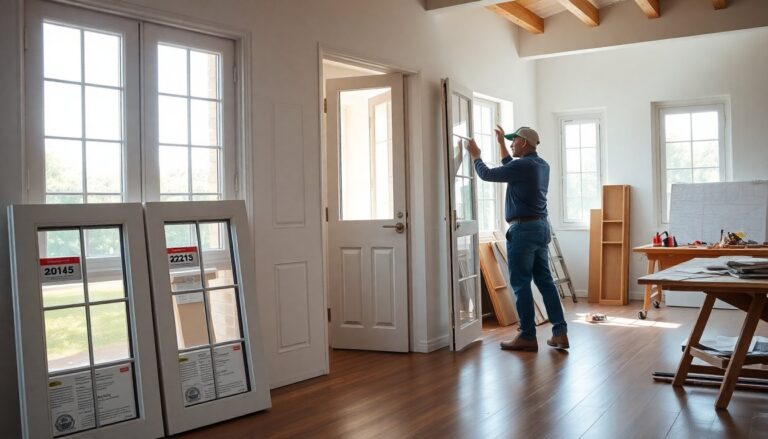
The 2025 window bonus offers homeowners a chance to improve their living spaces while benefiting from substantial financial incentives. This initiative allows for a 50% tax deduction on costs incurred from replacing windows and doors, making it an appealing option for energy efficiency renovations. Here are the
facts: homeowners must meet specific eligibility criteria, utilize proper payment methods, and follow necessary steps to receive their tax deduction through the Ecobonus.
The facts
To qualify for the window bonus, homeowners must adhere to certain conditions regarding the property and renovation work. New windows must meet strict thermal transmittance values as outlined in the Minimum Requirements Decree. For example, regions such as Asti and Alba
fall within climate zone E, where windows must achieve Uw values of up to 0.8 W/m2K. Many reputable suppliers, including Korus, Seil, and Kopen, provide products that meet these standards.
Understanding payment methods and procedures
Homeowners must make payments via bank or postal transfer, clearly indicating that they pertain to the Ecobonus. This ensures proper tracking of expenses, which is crucial for the application process. After selecting and ordering windows,
the installation team will provide the technical details necessary to initiate the Ecobonus application.
Installation and documentation
During installation, professionals will ensure compliance with required standards. Upon project completion, homeowners will receive technical documentation, including transmittance data, essential for the next steps. A key component for accessing the bonus is the ENEA communication, which must be submitted within 90 days of completing the work. Failure to communicate or late submissions can jeopardize eligibility for the tax deduction.
Maintaining documentation and seeking expert help
To recover the tax deduction, homeowners must retain specific documentation for at least ten years. This includes the ENEA communication, payment receipts, and technical documentation. These documents are vital for demonstrating compliance with legal requirements.
It is advisable to consult experienced professionals for managing the ENEA application. The meticulous preparation and submission of documentation require attention to detail, as errors could invalidate deduction claims. Companies such as Revello Serramenti offer comprehensive services, guiding homeowners through the entire process, from window selection to ENEA application, ensuring careful handling of each stage. They also provide free estimates in areas like Asti, Alba, and the Langhe region.
Additional energy efficiency initiatives
In addition to the window bonus, the Italian government promotes the Conto Termico 3.0, supporting energy efficiency improvements in existing buildings and encouraging renewable energy use. This initiative allocates 900 million euros annually and offers incentives of up to 65% on eligible expenses. The program emphasizes the installation of photovoltaic systems, battery storage systems, and electric vehicle charging stations, especially when paired with electric heat pumps to replace outdated heating systems.
Moreover, public buildings can receive up to 100% coverage of renovation costs, promoting sustainability in community infrastructure. Understanding these programs can help homeowners and local governments navigate options, potentially maximizing savings and improving energy efficiency.
0, presents a significant opportunity for homeowners to invest in energy-efficient renovations. By following guidelines and maintaining proper documentation, substantial savings can be achieved while contributing to a more sustainable future.