

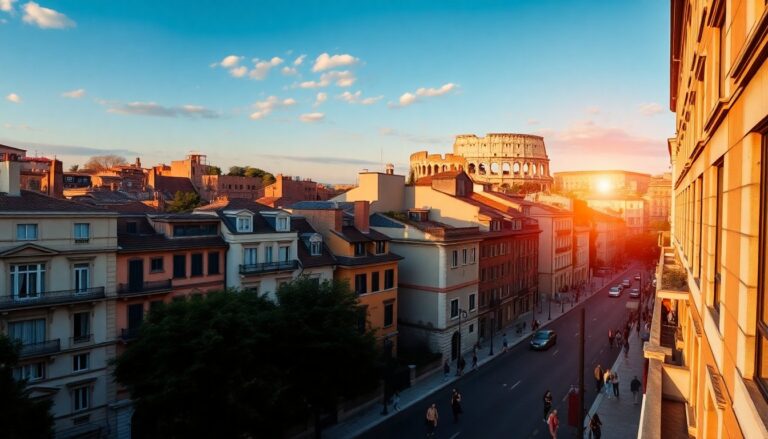
As the year comes to a close, Rome remains the premier city in Italy for both property buying and renting. Recent statistics from Immobiliare.it confirm that the capital retains a significant share of the national real estate market, with no notable changes from the previous year.
The
data indicates that Rome accounts for 7.5% of all property searches in Italy, a figure that rises to 11.2% for rental inquiries. Although this reflects a slight decrease of less than one percentage point compared to the prior year, it does not diminish the city’s appeal to real estate investors.
The competition: Milan and Torino
In the contest for real estate dominance, Milan is the closest competitor, consistently challenging Rome for the top
spot. The city attracts approximately 4% of property purchase searches and 6.5% for rentals, a decline from last year’s 7.7%. Torino follows closely behind, capturing 2.5% of sales interest and around 4% for rental properties.
A closer look at the neighborhoods
Examining neighborhood preferences reveals that Rome and Milan continue to lead. In Rome, the historic center is the most sought-after area, accounting for 0.94% of total preferences. The upscale districts of Parioli-Flaminio
and Salario-Trieste follow, while Bologna-Policlinico has dropped to fourth place, indicating a shift in buyer interest.
For property sales, the historic center of Rome remains a hotspot, closely competing with Città Studi in Milan. Other notable neighborhoods in Milan, such as San Siro and Affori-Bovisa, are also gaining popularity among buyers.
Transportation influence on property choices
Another emerging trend is the growing preference for homes near metro stations. In Rome, the most desirable station is San Giovanni, attracting 1.5% of buyers and 1.8% for rentals. Other neighborhoods like Re Di Roma and Termini also benefit from their proximity to efficient public transport, enhancing their attractiveness.
Tourism and its impact on real estate
The rental market landscape changes significantly in tourist destinations. The Castelli Romani area leads, capturing nearly 12% of total searches from individuals seeking a second home. Scenic locations such as the Sorrento Peninsula, Valpolicella, and Lago di Garda also show strong interest in vacation properties.
Overall, the real estate market in Rome remains resilient and robust, showcasing an enduring appeal. The city continues to attract those seeking homes for purchase or rental, maintaining a lead that other Italian cities find challenging to surpass.