

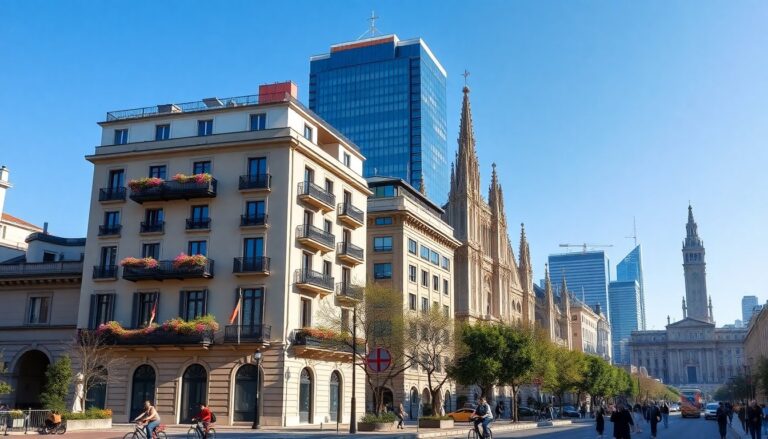
Interest in the Italian real estate market is growing. With evolving market dynamics, the choice of property location has become increasingly vital for buyers and investors alike. This article explores some of the most promising cities and regions, highlighting opportunities for those seeking a home
or a solid investment.
At the forefront, Milano remains a powerhouse in Italy’s real estate sector. The city, with a population exceeding 1.3 million and covering approximately 182 km², serves as the economic heart of the nation. Demand for properties continues to rise, particularly in neighborhoods undergoing urban revitalization. These developments aim to enhance local services and improve transport links, making property acquisition even more appealing.
Emerging trends in major cities
The capital
city, Rome, is following closely behind. With a population of around 2.7 million, the real estate market in Rome is experiencing steady consolidation, especially in its peripheral areas benefiting from substantial infrastructure investments. Ongoing urban regeneration efforts in these neighborhoods present exciting prospects for prospective buyers.
Stability in Bologna
Bologna stands out for its remarkable stability, largely due to its prestigious university, which fosters consistent demand for rentals. Meanwhile,
Turin shows signs of recovery, driven by targeted investments rejuvenating specific districts. Naples is also attracting investor interest, thanks to its rich historical background and a surge in tourism, leading to increased demand in both central and developing areas.
University towns and their rental potential
University towns emerge as particularly favorable locales for investment. These cities typically enjoy stable rental demand, relatively immune to market fluctuations. Padua, home to a historic university, offers a compelling balance between property prices and potential rental income, making it an attractive destination for long-term investors.
The stability observed in these university locales translates into rising rental prices in their most vibrant districts, reaffirming their appeal in an otherwise moderate market. Properties that are compact and well-connected to public transport are in high demand, marking these cities as ideal for those aiming for sustainable investments.
Tourism-driven locations
In addition to urban centers and educational hubs, opportunities also arise in burgeoning tourist destinations. The Tuscan coast, featuring gems like Viareggio and Camaiore, remains a favorite for those seeking vacation homes or properties suitable for short-term rentals. This segment has demonstrated remarkable durability in recent years, indicating a robust market.
In Southern Italy, the coastal region of Calabria is experiencing a revival, driven by competitive pricing and a growing tourism sector. For those seeking exclusivity, Lake Como continues to attract interest, with luxury properties boasting stunning lake views maintaining high demand and value due to their niche appeal.
The Italian real estate landscape is ripe with opportunities. Whether considering major cities, university hubs, or tourist hotspots, investors must carefully assess the most promising areas to optimize the long-term value of their investments. With strategic planning and insight into evolving market trends, success in the Italian property market is well within reach.