

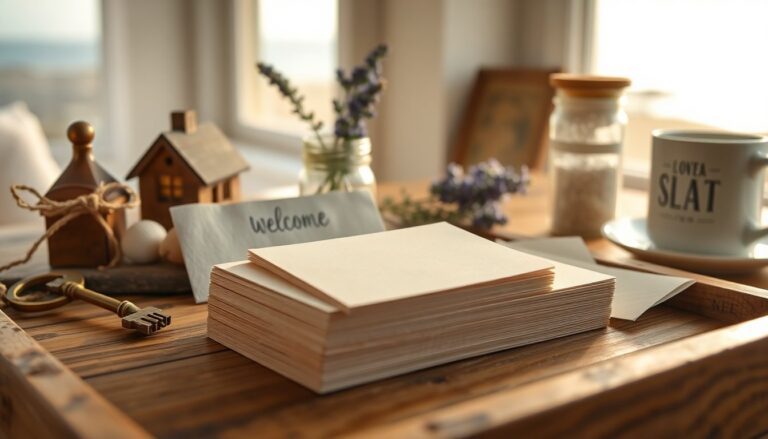
The physical business card remains a powerful asset for owners and managers of a holiday home. Even in a digital-first world, a well-crafted card gives guests a tangible reminder of their stay and a simple route back to your booking page. Treating the card as more than contact details
— as a tiny marketing piece that reinforces brand feeling — increases the chances of direct rebookings or referrals. Use the card to highlight a call to action such as a discount code or QR code that links straight to reservations, and place a few copies where guests are likely to find them during checkout or in welcome folders.
This article walks through the choices that matter: from formats and materials to finishing touches and ordering practicalities. You will
find guidance on when to customize a template, when to hire a designer, and how to balance style with legibility. The goal is to give you clear, usable steps so you can order cards that reflect your property’s personality while remaining functional — and, if you prefer, more environmentally responsible through sensible material selection.
Why a business card matters for your property
A carefully planned business card serves three practical roles: it communicates
professionalism, it simplifies follow-up for guests, and it acts as a compact advertisement when shared. Including essentials like phone, email and a short web address reduces friction; adding a QR code lets guests instantly reach your booking or review page. Use the card’s reverse to list local tips or a limited-time offer that nudges a return stay. Design choices that emphasize hierarchy and readability support these aims — prioritize a clear logo and headline on the front and reserve detailed information for the back to avoid overwhelming the guest.
Practical layout tips
When composing the layout, favor a clean front with a prominent logo and the property name; the back can host contact details, a promo code and a QR code that points to your booking page. Use typographic hierarchy to guide the eye and place critical text inside the safe margin so it won’t be trimmed in production. High-contrast color combinations enhance legibility, while a modest set of icons can make contact methods instantly recognizable. Keep text succinct and test the card at actual size to ensure phone numbers and URLs remain readable without magnification.
Selecting formats, materials and finishes
Format affects both perception and practicality: a standard size similar to bank cards fits wallets and cardholders, while square or slim options can create a distinctive tactile impression. Consider paper weight and texture to communicate the level of service you want to convey — heavier stock feels premium, while textured stock suggests rustic charm. Finishes such as spot UV or gloss on selected elements can draw attention to a logo or headline, but plan their placement carefully to stay within the printer’s print-safe area and avoid registration issues. A subtle finish often performs better than a heavy-handed application that competes with the design.
When to use varnish and special effects
UV coating and thermography can add visual and tactile contrast that elevates a simple card, especially if you want guests to notice a brand mark or property name on first glance. Apply such effects sparingly to preserve legibility and to keep costs in check. If you plan a varnish, request a proof to confirm how the treated areas interact with inks and paper texture; some finishes may darken or shift colors slightly. Also verify coverage limits with your print supplier to ensure the effect fits within technical constraints.
Eco options, production workflow and distribution
Sustainable choices are increasingly valued by travelers: consider sustainable materials such as recycled paper, hemp or bamboo stocks and printed papers sourced from certified forests. Collections like Better by Design are examples of ranges that offer transparency about sourcing and environmental impact, and such choices can be mentioned on the card or in the welcome information as part of your property’s story. From a production standpoint, start with a customizable template if you want speed, or upload a print-ready file when you have a finalized design; hiring a designer is wise if you want a bespoke look that aligns precisely with your branding.
Before placing a full order, always request a printed proof to check colors, trim and any special finishes. Decide on quantities with an eye to reorders: larger runs reduce unit cost but may lead to waste if details change. Keep a set in the property for guest departures and distribute others at local businesses or tourism offices where allowed. With balanced choices across format, materials, and design, your business card can act as a small but effective ambassador for your hospitality offering.