

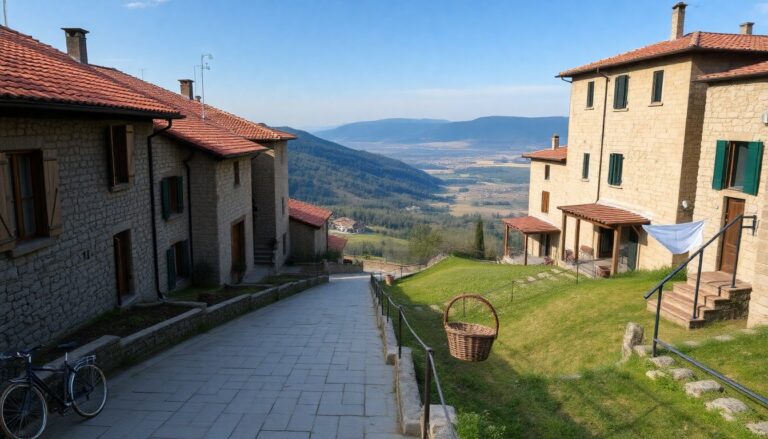
Sasso Berceto sits tucked into the upper Valtaro valley, a pocket of the Apennines that’s increasingly catching the eye of people hunting for a second home — or a slower life. The local property scene has character: tight-knit stone houses in the village, roomy casali perched on the
hills, and a smattering of renovated apartments and semi‑detached homes in smaller hamlets. Each option brings a different pace of life, a different renovation story and different long-term prospects. Here’s a practical, plain‑spoken guide to help you make sense of what’s on offer.
What you’ll discover on the market
– Village stone houses: Think narrow lanes, thick masonry walls, exposed beams and original stonework. These homes are compact, often
with little or no garden, and appeal to buyers who prize authenticity and village life over acreage. Interior modernisation is commonly needed, but land-related work tends to be minimal.
– Hilltop casali: Former farmsteads with larger footprints and more land — gardens, orchards or space to add guest suites. They grant privacy and sprawling views, but usually need a more substantial investment: roofs, insulation, plumbing and wiring often all require
attention, plus ongoing maintenance for larger properties.
– Semi‑detached houses and apartments: Found in hamlets or refurbished buildings, these can be faster to occupy. They’re attractive to buyers who want a more turnkey option with lower immediate renovation needs.
Practical checks to make at viewings
When you walk through a property, don’t focus only on paint and flooring. Check orientation and light, driveway access and parking, and the status of mains water, sewage and broadband. Many countryside plots need work on services or roads, and those costs can seriously push up the total price. Ask about legal titles and any easements or access agreements that could affect how you use the land.
Getting around and everyday logistics
Road quality varies sharply. In the village you’ll find tight lanes and limited parking; hamlets usually have better‑kept roads; remote casali are often reached by single‑track drives that may need regular maintenance or even upgrading. Public transport exists but is sparse, so a car is almost always essential. Bear in mind travel times to bigger towns change with seasons and weather — winter conditions can add significantly to journeys.
Utilities and connectivity
Expect a mix: some places have full mains connections; others rely on wells and septic systems. Broadband is improving across rural Italy but patchiness remains. If you work remotely or stream a lot, test both mobile signal and fixed internet speed on site. Where traditional options fall short, ask about satellite or fixed‑wireless providers and whether installation is feasible.
Realities of renovation and planning rules
Renovation needs depend on what you buy. Village stone houses often require interior modernisation while conserving historic features; casali frequently call for heavy works — new roofs, thermal upgrades, modern electrical and plumbing systems, and sometimes structural or seismic reinforcement.
Permits matter. Structural changes, extensions or conversions usually need authorisation, and local planning rules often protect facades or restrict building on agricultural land. Hiring a local architect or builder early pays off: they navigate the paperwork, estimate realistic timelines and help avoid surprises.
Budget items to factor in
– Detailed structural and systems surveys
– Permit and application fees
– Specialist restoration trades (masonry, timber, roofing)
– Utility connection or upgrade costs
– Contingency for hidden problems
Also research provincial and municipal incentives. Grants, tax relief or other support for heritage restoration and energy efficiency are sometimes available, but eligibility and conditions change — confirm specifics with local authorities.
How to prepare for viewings and due diligence
– Visit at least twice and in different seasons. Drive the routes you’d use for shopping, work and school so you can judge commute times and winter driving conditions.
– Walk access roads. Note steep, narrow or poorly surfaced stretches and ask the municipality about maintenance and snow clearing.
– Verify nearby services: supermarket, medical facilities, schools and emergency services.
– Test internet and mobile signal on site. If speeds are low, check satellite or fixed‑wireless options and installation requirements.
– Commission technical inspections: structural survey, roof, foundations and utilities. Request cadastral documents and carry out title searches. Confirm any landscape or heritage restrictions that could limit plans.
What you’ll discover on the market
– Village stone houses: Think narrow lanes, thick masonry walls, exposed beams and original stonework. These homes are compact, often with little or no garden, and appeal to buyers who prize authenticity and village life over acreage. Interior modernisation is commonly needed, but land-related work tends to be minimal.
– Hilltop casali: Former farmsteads with larger footprints and more land — gardens, orchards or space to add guest suites. They grant privacy and sprawling views, but usually need a more substantial investment: roofs, insulation, plumbing and wiring often all require attention, plus ongoing maintenance for larger properties.
– Semi‑detached houses and apartments: Found in hamlets or refurbished buildings, these can be faster to occupy. They’re attractive to buyers who want a more turnkey option with lower immediate renovation needs.0
What you’ll discover on the market
– Village stone houses: Think narrow lanes, thick masonry walls, exposed beams and original stonework. These homes are compact, often with little or no garden, and appeal to buyers who prize authenticity and village life over acreage. Interior modernisation is commonly needed, but land-related work tends to be minimal.
– Hilltop casali: Former farmsteads with larger footprints and more land — gardens, orchards or space to add guest suites. They grant privacy and sprawling views, but usually need a more substantial investment: roofs, insulation, plumbing and wiring often all require attention, plus ongoing maintenance for larger properties.
– Semi‑detached houses and apartments: Found in hamlets or refurbished buildings, these can be faster to occupy. They’re attractive to buyers who want a more turnkey option with lower immediate renovation needs.1