

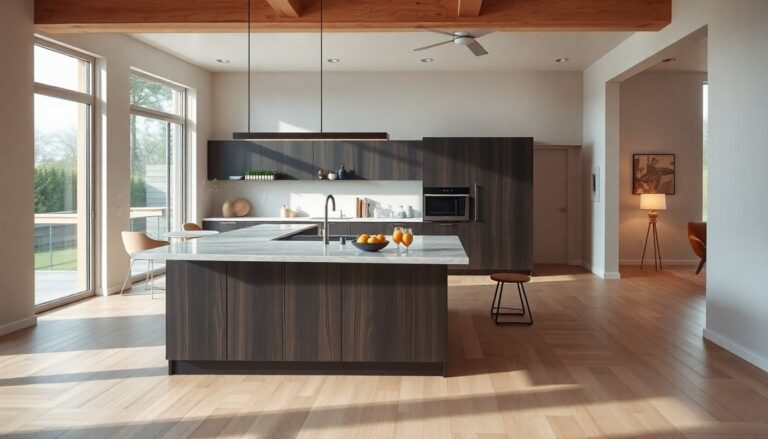
The modern open-plan home often relies on a kitchen peninsula to separate cooking and living areas without closing them off. In practice this means thinking beyond looks: flows, ergonomics and service connections must be arranged before construction starts. This article gives clear, actionable guidance
on dimensions, seating and installation priorities so you can design a peninsula that is both functional and social. It also draws short lessons from public procurement and market data to show how transparency, planning and energy costs affect budgets and outcomes.
Whether you are remodeling or specifying a new layout, the key is to combine aesthetic choices with technical needs early in the process. The following sections cover recommended clearances and
sizes, how to fit active elements like sinks or hobs into the peninsula, strategies for seating and finishes, plus a short look at how governance and electricity markets can influence feasibility and long-term running costs. Use these points as a checklist when briefing a designer or contractor.
Practical sizes and ergonomics for a peninsula
Start with circulation: leave at least 100–120 cm between the peninsula edge and opposite furniture
or a wall so doors, drawers and a dishwasher can open freely. A usable peninsula length should not fall below 120–150 cm to provide space for food prep and casual dining. Depth depends on purpose: about 45–60 cm suffices for a snack counter, while a depth of 70–90 cm or more is appropriate when integrating a sink or cooktop. Plan these dimensions alongside appliance sizes to avoid last-minute compromises.
Workflow and the work triangle
Arrange the main points—fridge, cooktop and sink—so that movement is logical and efficient. The work triangle is a simple concept that helps minimize unnecessary steps: position plumbing, gas and electrical supplies early so the peninsula can participate in this triangle without costly relocations later. If the peninsula includes an active element, factor in service routes and ventilation; if it is passive, prioritize storage and countertop space to maximize utility.
Seating, materials and visual integration
When the peninsula doubles as a social counter, reserve roughly 60 cm of width per seat to ensure comfort and freedom of movement. Choose heights compatible with stools or chairs and allow for knee clearance. Visually, materials and finishes should echo the living area to create a fluid transition: consider matching wood tones, coordinating metals or a continuous stone surface. Lighting, plinths and handle choices are small details that shape perceived quality and daily usability, and they should be specified at design stage.
Storage and multifunction uses
Exploit the space under the peninsula with drawers, pull-outs and dedicated bins so it becomes a multifunction element rather than a simple divider. If the peninsula will host appliances, plan wiring and ventilation paths; if not, prioritize deep drawers and open shelving that are accessible from both kitchen and living sides. Early planning yields better integration and avoids ad hoc fixes that reduce both aesthetics and performance.
Why governance and procurement issues matter beyond kitchens
Good planning applies at all scales. A recent public debate about a major infrastructure project highlights how procedural choices can derail outcomes: critics have argued that a government decree meant to address the Court of Auditors findings did not remove the fundamental problem of a missing new tender. Observers noted alleged post hoc changes to tender documents favoring a private consortium, shifts from project financing to fully public funding, and the absence of mandatory opinions and reworked economic plans. These points underscore a broader principle relevant to household projects too: transparency, clear contracts and early verification of technical and regulatory requirements prevent costly rework.
Key procurement criticisms in brief
The main criticisms focused on compliance with European rules on transparency and competition (including references to procurement directive article 72), the need to re-evaluate alternatives, and the requirement to redo economic-financial documentation and special authorizations such as an IROPi. The debate will be addressed at a public meeting scheduled for 27 March at the Salone delle Bandiere in Messina, reflecting how procedural gaps can become civic issues.
Energy prices and operating cost implications
Running costs influence material and appliance choices. Market data show a continuing rise in wholesale electricity prices: according to the GME, the average price for the week from Monday 9 to Sunday 15 March was 147.54 euro/MWh, up from 141.28 euro/MWh the prior week. Traded volumes reached 4.7 million MWh with market liquidity at 85.3%. Regional averages ranged from 138.72 euro/MWh in Sardegna to 158.46 euro/MWh in Sicilia. Higher energy costs make efficient appliances and careful placement of powered devices more important when designing a kitchen peninsula.
In short, a successful peninsula begins with precise measurements and early technical planning, and benefits from clear procurement and realistic cost assessments. Consult a qualified designer or engineer to coordinate plumbing, gas and electrical work, confirm compliance with relevant rules, and evaluate running costs so the final result is both beautiful and practical.