

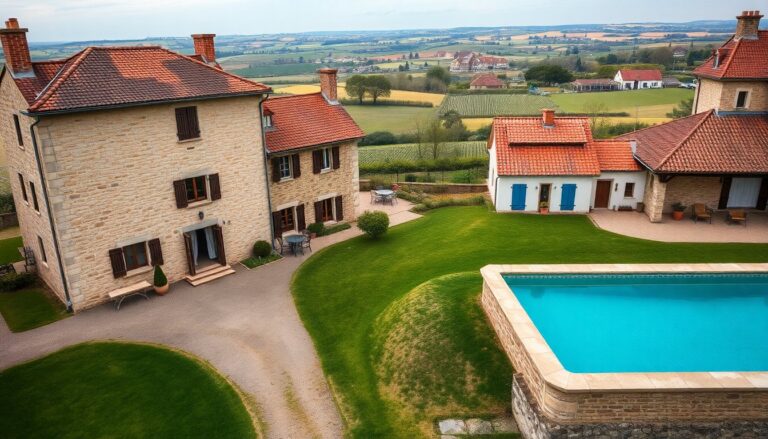
The property described here sits in the rolling landscapes that bridge the Beaujolais and Burgundy regions, close to the village of Saint-Amour-Bellevue. It is presented as a classic, period residence that has been configured to serve both as a generous private home and as a small hospitality business. The estate
offers a principal historic dwelling alongside two independent and fully operational gîtes, a private swimming pool and sizeable outdoor acreage that can be shaped into ornamental gardens, orchards or productive agricultural plots. This combination makes it appealing for buyers looking for a full-time residence with immediate rental income possibilities.
Set among vineyards and pastoral lanes, the house captures the appeal of rural eastern France: market towns,
wine routes and seasonal events are within easy reach. As a historic property, it benefits from an architectural character that modern conversions rarely replicate, while the presence of two separate rental units means the estate can generate revenue from day one. The listing was highlighted in Second Home Magazine on 29/03/2026, noting the practicality of having both a family-sized main house and income-generating accommodations on the same parcel
of land.
Property overview and layout
The estate is organized to separate private living from guest accommodation: the main house serves as the owner’s core residence with reception rooms and private quarters, while the two gîtes are self-contained units designed for short- or medium-term rental. The pool sits discreetly in the garden, offering privacy and a focal point for outdoor entertaining. Together, these elements create a versatile layout that suits families, multi-generational living or hybrid owner/rental uses. The grounds provide space for terraces, parking and utility areas, and they afford the flexibility to expand or landscape according to an owner’s vision.
Income potential and practical considerations
Running the two gîtes can supply steady income during high season and supplemental revenue year-round with targeted marketing and management. Key practical factors include local tourist demand, seasonal occupancy patterns, and compliance with municipal regulations regarding short-term rentals. Investment in basic hospitality amenities and clear separation of services (and utilities) between the main house and the rental units will protect privacy and simplify operations. Prospective buyers should also budget for routine pool maintenance, property insurance, and periodic updates to interior finishes to sustain guest satisfaction and rates.
Management models and returns
Owners often choose between self-managing the gîtes to maximize net returns or hiring a local agency to handle bookings, cleaning and guest communication. Self-management reduces fees but increases time commitment; agency management trades margin for convenience and broader marketing reach. When assessing potential returns, factor in occupancy rates typical for the region, average nightly rates for similar properties, and seasonal maintenance costs. A conservative pro forma will support a realistic expectation of cash flow and help determine whether the property meets an investor’s yield or lifestyle objectives.
Renovation, preservation and materials
Renovating a period property requires balancing historic character with modern comfort. Retaining original features—stone walls, timber beams or antique masonry—can boost appeal, while selective upgrades (heating, insulation, plumbing) improve year-round livability. Use of traditional materials such as lime plaster and breathable mortars can be appropriate for older fabric, and working with skilled local craftsmen preserves the property’s authenticity. Any restoration work should comply with local heritage rules where applicable, and owners should seek quotes from experienced contractors familiar with rural French buildings.
Lifestyle, location and market context
Living here combines countryside calm with access to the gastronomic and cultural riches of Burgundy and Beaujolais. Local markets, vineyards and small producers create a lifestyle centered on seasonal foods and events, while nearby towns supply services and transport links. For buyers seeking a holiday-home model, the dual-use format allows private enjoyment while leveraging the property’s appeal to tourists seeking authentic regional stays. For families, the estate offers room to grow, areas for outdoor hobbies and a stable rural setting.
In summary, this period property near Saint-Amour-Bellevue combines a dignified main residence, two ready-to-rent gîtes, a private pool and adaptable land—creating a compelling option for those who want a primary home that also functions as an investment. Whether approached as a lifestyle purchase, a hospitality operation, or a mix of both, the estate represents a classic example of multi-use rural real estate in eastern France, with immediate rental capability and long-term value tied to preservation and prudent management.