

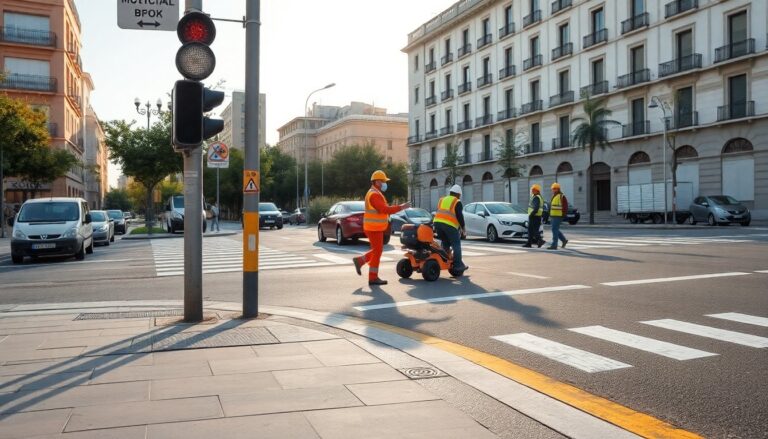
The municipal bodies active in Genoa’s western districts have recently outlined a program of practical measures affecting daily mobility and local services. The Commission 2 of Municipio 6 met on 01 April 2026 at the offices in via Sestri, 7 under the presidency of Paola Vassallo; the session, scheduled from 16:00 to 19:00, concentrated on resolving
parking shortages and improving safe access for pedestrians across the Medio Ponente area. Those decisions complement the earlier giunta meeting held in the same territory on 26 March 2026, where broader planning and social initiatives were discussed.
The following text synthesizes the key topics and operational steps agreed by local authorities, while also listing community notices and upcoming events published by associations that serve residents.
Throughout the piece, technical terms such as park&ride and zone 30 are defined in context to make the proposals accessible to citizens and stakeholders.
Decisions on parking supply and the park&ride approach
The Commission focused on increasing the availability of parking and promoting parking interchanges, described as strategic nodes where drivers can leave private vehicles and continue their journeys on public transport. The aim is to reduce inner-city congestion by encouraging multimodal mobility. Concrete measures discussed included creating or marking additional motorcycle stalls along via Pionieri and Aviatori d’Italia, tracing parking bays in via Borzoli near the cemetery and identifying both temporary and permanent parking areas in Cornigliano to respond to immediate demand.
These actions were framed as short- and medium-term interventions: immediate solutions such as temporary markings or reallocating underused space, and longer-term investments to formalize park&ride facilities. The Commission also considered incentives and promotion to increase use of these nodes, highlighting that coordinated messaging and clear signage are essential for success.
Pedestrian safety and targeted infrastructure works
Safety around walking routes and sports facilities was given explicit priority. The body recommended installing raised crossings in via Nino Cervetto and reworking the crossing in via Puccini by the Genova Sestri Ponente rail station and the new pedestrian footbridge. Raised crossings were presented as a key measure to calm traffic, improve driver sightlines and protect pedestrians, an approach aligned with best practices in urban traffic management.
Localized infrastructure and signage fixes
A number of small but effective works were proposed: restoring horizontal road markings at the corner of Via Manno and via Briscata, building a sidewalk on Via Domenico Oliva near civic numbers 30 and 32 and implementing safety measures in front of the nursing home Villa degli Ulivi. The Commission also suggested installing parking bollards on via Nostra Signora di Lourdes to prevent illegal stops and maintain traffic flow. These are straightforward interventions intended to yield visible improvements quickly.
Municipal governance, social projects and community services
The March 26 giunta session in Municipio Medio Ponente expanded on strategic themes beyond mobility. Mayor Silvia Salis highlighted the need for constructive ties with the industrial sector, noting recent talks with Fincantieri’s CEO Pierroberto Folgiero about possible reconversion of industrial sites for social uses. The giunta approved the creation of an Osservatorio tecnico comunale and a permanent roundtable to guide housing policy, and advanced a proposal to update the PUC rules to strengthen soil and green protection, with targeted measures such as depavimentazione at Villa Bombrini.
Culture, heritage and environmental management were also on the agenda. The council backed applications to national funding for sites on Italy’s UNESCO candidate lists and noted the inclusion of local places in the Rolli Days 2026 program, like the newly opened Badia di Sant’Andrea degli Erzelli. Social programs were reaffirmed—services for children, the elderly and integration initiatives including Italian-language support for migrant women, particularly from the Bengali community.
Operational services and schedules
Several operational updates were shared: the Welfare department outlined the Lgnet3 mobile unit calendar with stops planned for Sestri on 30 March, 13 April and 27 April, and for Cornigliano on 23 March and 20 April. Environmental
measures include a pilot project for bulky-waste recovery in Piazza Consigliere, installation of new recycling bins in via Sestri and a new Arpal monitoring station in via Cornigliano. A community energy study was proposed for the roof of the building in via Merano.
Associations, events and how citizens can stay informed
Local associations also circulated practical notices. The Associazione Neurofibromatosi (ANF) announced a temporary closure of its Parma office from 3 to 8 April inclusive and shared contact routes for emergencies via its board and regional officers. ANF listed events such as “Oggi parlo io” on 16 May 2026 at the Centro Congressi Istituto Patristico Augustinianum in Rome and the “Shine a Light on NF” campaign on 17 May 2026, plus ongoing webinars and the “Vivere con NF1” project collecting life stories.
Residents are encouraged to consult official municipal pages and association websites for updates on meeting times, locations and any schedule changes. Maintaining open lines between the municipal administration and civic organizations was presented as essential to convert the priorities identified—parking, safety, housing and social inclusion—into visible improvements across the Medio Ponente territory.