

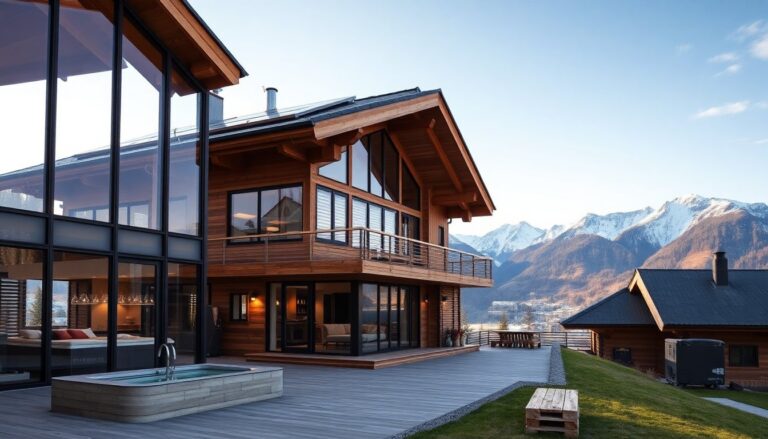
The chalet in Crans-Montana combines contemporary architecture, large glazed surfaces and systems designed for long-term efficiency. It occupies multiple levels and prioritizes natural light through expansive windows and high ceilings. The design frames uninterrupted views of the Alps while preserving privacy
and modern comfort.
The residence includes technical systems intended to lower running costs and enhance year-round comfort. Notable features are a heat pump, integrated photovoltaic panels and a central vacuum system. The property is listed as an R1 primary residence, a classification that carries specific limits on eligible buyers and on how the unit may be marketed.
From a regulatory standpoint, the R1 designation affects transferability and promotional channels. The Authority has
established that primary-residence classifications typically restrict ownership to individuals who meet residency or local-ownership criteria. The precise constraints depend on cantonal and municipal rules in the Crans-Montana area.
Dal punto di vista normativo, the R1 status changes transactional dynamics. The risk compliance is real: developers and brokers must verify buyer eligibility before listing. Non-compliance can delay sales, trigger fines or require corrective measures under
local property law.
For prospective buyers, the classification means due diligence must include checks on residency requirements and permitted uses. From a practical perspective, the building’s efficiency technologies reduce operational expenses but do not alter legal purchase conditions. Sellers should document system certifications and energy performance to support marketing and valuation.
Layout and living spaces
Following the description of systems and daylight strategy, the chalet’s internal plan prioritizes privacy and flexibility across its three levels. Public areas remain on the ground floor, while private bedrooms and service rooms occupy the upper and lower floors. The arrangement supports family living and separate guest accommodation without overlap.
The upper level groups principal sleeping quarters around a central circulation core. The master suite features an en suite bathroom and a dressing area that can double as a private study. Secondary bedrooms are sized for children or staff and include built-in storage to reduce furniture clutter.
Adaptable rooms appear on each floor. A flexible study on the ground floor is configured for remote work, with wired connectivity and natural light. Lower-level spaces can be fitted as a home gym, playroom or independent guest flat with a separate entrance, improving privacy for long-term visitors.
Service and technical rooms are consolidated to simplify maintenance. Laundry, boiler plant and storage are located on the basement level and are accessible without crossing living areas. This reduces noise transmission and preserves the quality of primary spaces.
From a design perspective, circulation is kept efficient. Stair locations and a possible lift provision ensure vertical flow with minimal corridor waste. The plan allows phased adaptations as household needs change over time.
Private quarters and adaptable areas
The plan allows phased adaptations as household needs change over time. Private quarters and adaptable areas are arranged to support daily life and occasional hosting.
On the first floor a comfortable guest bedroom includes an en suite bathroom and a walk-in wardrobe. Adjacent, a multifunction room is configured for quick conversion into a home cinema or an additional dedicated workspace. This flexibility increases the property’s appeal to second-home buyers and families seeking adaptable layouts.
At garden level the sleeping accommodation emphasizes privacy and convenience. The master suite features a spacious dressing room, a private bathroom with a shower and direct access to a secluded private terrace. Two further en suite bedrooms also open onto the terrace, preserving independent access for occupants and visitors. A well-organized laundry room keeps household functions separate from the sleeping areas.
Practical circulation and guest hosting
Circulation routes prioritise short, legible connections between bedrooms, service spaces and outdoor terraces. Sightlines and door placements reduce cross-traffic between public and private zones. The arrangement supports staged use of the property for long stays, short rentals or extended family visits.
From a regulatory standpoint, the layout facilitates compliance with common accessibility and fire-safety standards. The design choices therefore address both daily comfort and practical compliance risk for owners and managers.
From a regulatory standpoint, the plan continues to separate reception spaces from private areas to safeguard both daily usability and guest hosting needs. Direct garden-level access from bedrooms and multiple terraces enhance flexibility for seasonal visitors and for occupants combining leisure with remote work.
Wellness area, storage and technical rooms
An integrated lower-floor wellness zone provides recovery space after outdoor activities. The dedicated SPA includes a sauna, a relaxation room and shower facilities designed for private use.
Also located on this level are a ski storage room and a covered garage with space for two cars. The layout keeps service flows distinct from guest routes, reducing maintenance burden and operational complexity.
From a regulatory standpoint, clear functional segregation can simplify compliance with building codes and safety standards. The Authority has established that accessible egress, ventilation and fire separation are essential in mixed-use residential amenities, and those requirements appear addressed by the plan.
The technical room contains the property’s principal building systems. A modern heat pump and on-site photovoltaic panels intend to lower operational costs and reduce dependence on grid electricity. A central vacuum system adds convenience and supports hygiene standards.
Energy strategy and long-term value
Pairing rooftop photovoltaic generation with an electrically driven heat pump yields a resilient and efficient energy profile for the chalet. Daytime solar production can directly power heating cycles or water heating, reducing net grid demand and improving the building’s energy rating. That rating frequently influences resale value and appeals to buyers prioritizing sustainability.
Regulatory status and buyer eligibility
From a regulatory standpoint, energy installations intersect with building codes, safety rules and local permitting. The Authority has established that electrical heating systems integrated with photovoltaic arrays must meet connection and protection standards set by grid operators and local utilities. Compliance risk is real: improper installation or missing permits can delay transactions and trigger remedial orders.
Interpretation and practical implications
Systems that reduce grid consumption may improve a property’s classification under energy performance schemes. Improved classification can affect mortgage eligibility and tax incentives in jurisdictions that link benefits to energy ratings. For buyers, visible renewable generation and efficient heating systems lower projected utility bills and operating costs.
What developers and buyers should do
Developers should obtain electrical connection approvals and retain certified commissioning reports for both the heat pump and the photovoltaic panels. Prospective buyers should request technical dossiers, warranty certificates and evidence of compliance with grid-connection requirements. From a contractual standpoint, clear clauses on maintenance obligations reduce post-sale disputes.
Risks and possible sanctions
Noncompliance can lead to fines, forced decommissioning or requirements to upgrade installations. Regulatory agencies may require corrective works if installations fail to meet safety or interconnection standards. The Authority has established that liability can extend to property owners when contractors fail to secure required permits.
Best practices for compliance
Engage licensed installers and obtain written commissioning and inspection records. Keep documentation for warranties, performance guarantees and any incentive claims. Monitor system performance periodically and arrange preventive maintenance. For transactions, include certification of conformity as a condition precedent to closing.
Documentary evidence of proper installation and grid approval is the decisive factor for buyer confidence and marketability.
Documentary evidence of proper installation and grid approval is the decisive factor for buyer confidence and marketability. From a regulatory standpoint, the chalet is offered as a R1 primary residence, not an R2 second home. This legal classification limits the buyer pool to Swiss citizens and foreign nationals holding Swiss residence permits B or C. The property cannot be marketed or sold as a second home to either residents or foreign nationals.
The Authority has established that classification of a dwelling as R1 or R2 determines eligibility for purchase, taxation treatment and certain municipal levies. Compliance risk is real: incorrect marketing or sale could expose sellers and agents to administrative penalties or contract annulment under cantonal rules. From a regulatory standpoint, accurate documentation and clear contractual clauses are essential.
Those advising clients should note immediate practical implications. Lenders may apply different loan-to-value ratios and interest terms for primary residences. Tax authorities may assess wealth and occupancy taxes differently. Municipal services and planning permissions sometimes depend on declared use.
Why this chalet stands out
The chalet combines energy-efficient systems with a legal status that appeals to long-term residents. For entrepreneurs seeking relocation and families prioritising schooling and municipal services, the R1 classification is an advantage. Agents should tailor messaging toward buyers eligible under current residence-permit rules, and avoid communications that imply availability as a second-home investment.
What companies must do next is clear. Verify residence-permit status early in the sales process. Include explicit warranty clauses about the dwelling’s R1 status in agreements. Maintain full installation and grid-connection records to underpin financing and regulatory checks.
Failure to align marketing and contracts with the legal classification carries tangible risks, including fines, rescission claims and reputational damage. The Authority has emphasised strict oversight in similar cases. Expect buyers’ counsel and lenders to request documentary proof before completing a purchase.
Expect buyers’ counsel and lenders to request documentary proof before completing a purchase. From a regulatory standpoint, verified installation certificates and grid-connection approvals will determine whether the chalet meets local permit and energy performance requirements.
Built-in energy-efficient systems such as photovoltaic panels and a heat pump lower operating costs. They also align the property with current buyer preferences for low-consumption homes. The Authority has established that documented compliance with installation and grid standards increases transaction certainty.
Dal punto di vista normativo, the presence of certified systems affects mortgage underwriting and insurance assessments. Compliance risk is real: incomplete or uncertified works can delay completion, trigger remedial orders or reduce market value. Sellers should secure final acceptance reports and grid operator confirmation before marketing the asset.
For investors and owner-occupiers, the chalet’s tri-level layout, wellness facilities and outdoor terraces strengthen its appeal to families and professionals. From a practical standpoint, documented energy performance and technical approvals will be decisive factors for buyers, lenders and insurers.