

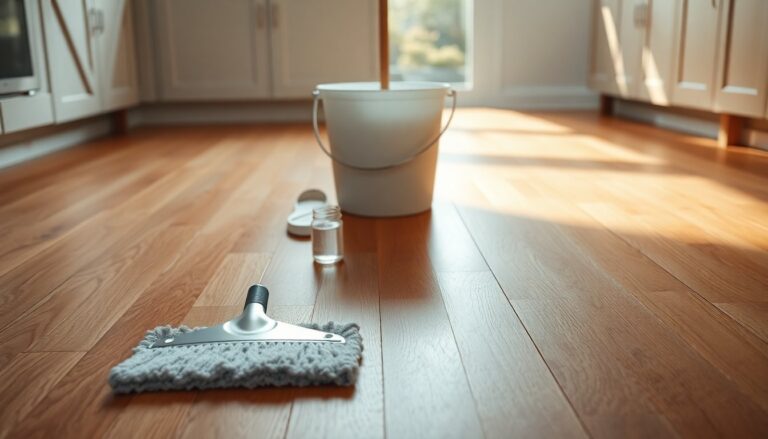
The moment you finish mopping and your floor looks clean but still feels tacky underfoot is a familiar frustration for many. This article explains the mechanics behind that unpleasant sensation and offers a clear, step-by-step approach to restore a genuinely clean surface. The core
issue is not always visible dirt but a thin layer of cleaning residue and kitchen grease that dries into a bond that traps dust and fingerprints. By adjusting technique—rather than simply increasing product strength—you can avoid repeated work and keep floors feeling smooth and fresh for longer.
To resolve the problem you must recognize two linked processes: what deposits on the surface and how cleaning practice affects
what remains. Everyday detergents, softened water, cooking oils and airborne particles combine into a sticky composite when not rinsed away. Think of the leftover film as a detergent film, a thin layer of dried surfactants and grime that adheres to finishes. The remedy lies in a measured cleaning protocol: an initial degreasing pass, careful wringing of tools, and a deliberate rinsing stage to remove any residue before it dries.
Why floors feel sticky after cleaning
The tactile stickiness usually originates from incomplete removal of cleaning agents or oils. When too much soap is used, its surfactants lift soils but then remain on the surface and attract more dirt. Water temperature and technique matter: cold water reduces dissolution of grease, while failure to follow with a rinse leaves materials to dry into a tacky coat. Another common cause is inadequate wringing of mops or cloths, which applies an excess of diluted product to the floor. Properly executed, the cycle should include a targeted degreasing step followed immediately by a rinsing pass using clean water to prevent any sticky film from forming.
Common mistakes and how to avoid them
Household habits often worsen the issue: using the wrong detergent for kitchen soils, skipping corners and grout where products pool, and over-wetting porous materials. A frequent error is increasing detergent quantity under the impression it improves cleaning; the opposite happens because surplus soap remains as residue. Another overlooked detail is the second pass with a nearly dry cloth: moving a slightly damp microfiber over the floor at the end removes lingering moisture and streaks. Adopting these small changes—moderate dosing, correct wringing, and a final dry wipe—prevents the sticky feeling without resorting to harsh chemicals.
Practical cleaning recipe and dosages
For effective degreasing that avoids heavy residues, prepare a balanced, homemade solution: warm water mixed with a tablespoon of baking soda, half a cup of white vinegar, and a few drops of mild liquid soap such as castile or Marseille soap. The vinegar helps break down oils while the baking soda acts as a gentle abrasive and deodorizer; the soap assists in lifting particles. Use this mixture sparingly—immerse a mop or a microfiber cloth, wring thoroughly so it is damp rather than soaked, and perform an initial cleaning pass. Follow immediately with a second pass using plain clean water to rinse away any dissolved residues.
Adapting treatment to floor types
Not all surfaces react the same to water and cleaners, so adjust your approach by material. Hard ceramics and porcelain tiles tolerate a stronger degreasing pass and can benefit from a light alcohol or vinegar rinse to speed drying. Porous floors like unglazed terracotta or stone need minimal liquid and gentler action to prevent deep penetration and staining; two light moppings with diluted solution and quick rinses work best. For wooden floors, always follow manufacturer recommendations: sealed or varnished parquet can handle slightly damp microfiber cleaning, while oiled parquet requires oil-specific products and minimal water to protect the finish.
Parquet and delicate surfaces: extra precautions
When dealing with delicate finishes, prioritize low-moisture methods and protective products. On parquet with a varnished surface, use well-wrung cloths and avoid abrasive scrubbing; for oiled wood, select a product designed to nourish the oil layer without leaving a film. If a sticky layer persists after cleaning, a final wipe with a dry microfiber cloth or a mildly diluted alcohol solution can remove streaks and speed evaporation. Ultimately, consistent technique—careful dosing, thorough rinsing, and attention to finish—ensures floors stay clean without that unpleasant tacky sensation.