

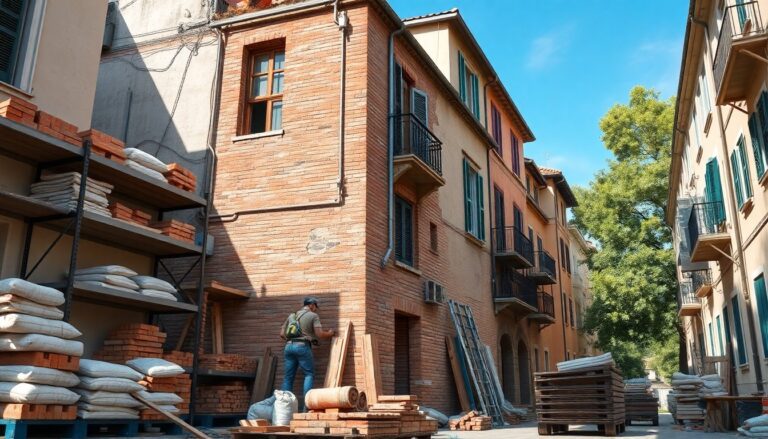
The Italian fiscal landscape is set for significant changes, bolstered by the home renovation bonuses. These incentives play a vital role in stimulating the construction sector and promoting essential restoration efforts nationwide. Recently, Vannia Gava, the Deputy Minister of the Environment, confirmed that tax deductions
will continue through 2026, allowing homeowners to benefit financially.
Incentives for primary and secondary residences
In 2026, the renovation bonus offers homeowners a 50% deduction for primary residences and a 36% deduction for secondary homes. These rates remain consistent with previous years, enabling individuals to improve the energy efficiency and aesthetics of their properties without incurring additional financial burdens.
The impact of tax deductions on the construction industry
The confirmation of ongoing tax deductions has generated positive reactions among industry stakeholders. Claudio Feltrin, president of FederlegnoArredo, stated that maintaining the renovation bonus is crucial for homeowners and the entire production sector. A stable extension allows businesses to develop investment strategies, reducing the uncertainty that has affected the market recently.
Eligibility criteria and application process
To benefit from these tax deductions, applicants must meet specific
criteria. Primarily, they must either own the property or possess certain rights over it. To qualify for the 50% deduction, it is essential that the individual resides in the property undergoing renovation.
Spending limits and deadlines
According to the 2026 Budget Law, a maximum spending limit of €96,000 per property unit has been established, consistent with previous years. This cap enables homeowners to plan renovations with confidence, ensuring they remain within the specified budget.
Confirmation of furniture bonuses for 2026
In addition to renovation incentives, the furniture bonus has been confirmed for 2026. Homeowners are eligible to claim a 50% deduction on expenses up to €5,000 for both primary and secondary residences. This incentive is particularly beneficial for those aiming to enhance their home’s interior alongside renovation projects.
Future outlook for the renovation market
The extension of tax incentives is anticipated to drive increased investments in renovations and boost employment within the sector. Market operators are optimistic that the government will continue to support initiatives focused on improving energy efficiency and enhancing building safety, which are becoming increasingly critical in today’s society.
Post-renovation property sales and tax implications
Numerous taxpayers have taken advantage of renovation bonuses to upgrade their properties. However, concerns arise regarding the tax implications of selling a property that has benefited from these renovations. The Italian Revenue Agency has clarified that any unused portions of tax deductions for renovations can be transferred to the buyer upon sale, unless otherwise stipulated in the contract.
Understanding the transfer of deductions
Article 16-bis, paragraph 8 of the TUIR specifies that any unused tax deductions related to renovations will be transferred to the purchaser of the property. This provision ensures that the benefits of renovations are preserved during a sale, enhancing the appeal of renovations for both sellers and buyers.
Specifics regarding furniture bonuses after sale
In contrast, the regulations governing the furniture bonus are different. Residual deductions from the furniture bonus remain with the original homeowner and cannot be transferred to the new buyer, even if the renovation is associated with new furniture purchases. This distinction highlights the separate nature of these incentives.
Understanding furniture deduction limits
The furniture bonus enables taxpayers to recover 50% of their expenses on designated furniture and appliances, with maximum spending limits that have varied over the years. For 2026, the limit is set at €5,000, reflecting ongoing support for homeowners aiming to improve their living spaces.
This confirmation of tax incentives for renovations in 2026 represents a significant boost for the Italian housing market. As homeowners and industry professionals take advantage of these opportunities, the impact of these bonuses will extend beyond individual properties, fostering broader economic stability and growth.