

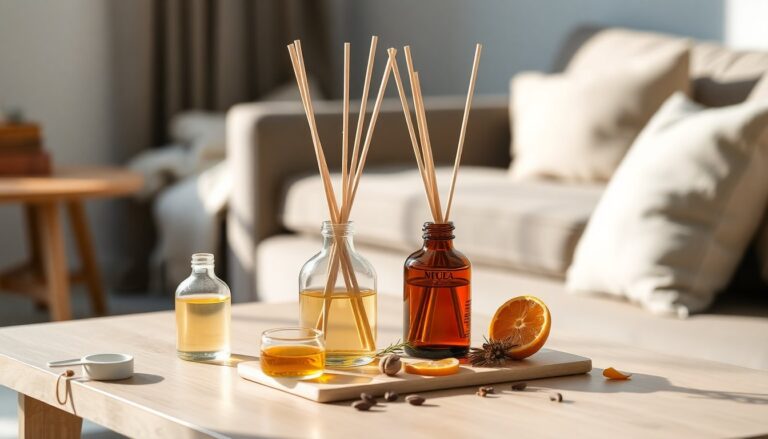
First impressions: how scent shapes property viewings
Sight grabs attention, but scent quietly seals the deal. A subtle, natural diffuser can make a house feel cared for, calm and welcoming—without the artificial edge of many commercial products or a big budget. This guide walks you
through a simple DIY reed diffuser and practical alternatives so you can create a consistent, low-cost scent strategy across holiday lets, second homes and rental portfolios.
What this guide covers
– How to build a basic reed diffuser with everyday ingredients
– The role of each component and the science behind scent release
– A step-by-step 400 ml recipe for a standard jar
– Placement, maintenance and safety tips
– Alternative low-cost
options and a template for standardizing scent across multiple properties
Who benefits
This is written for property owners, estate agents, holiday-let managers and hosts who want predictable, repeatable scent cues that enhance guest experience without adding large recurring costs. If you manage several properties, the approach is easy to replicate and scale.
Why a natural diffuser matters
Scent affects perception. A controlled, subtle aroma can boost
perceived cleanliness and comfort—and can influence booking decisions and reviews—while avoiding the overpowering, chemical notes of some store-bought products. The method here prioritizes safety, flexibility and consistency so teams can match fragrances to room types and occupant sensitivities.
How reed diffusers work (brief)
A reed diffuser is elegant in its simplicity. Rattan or bamboo reeds pull liquid up by capillary action and release volatile scent molecules into the air. A small proportion of alcohol (food-grade ethanol or neutral vodka) helps dissolve the essential oils and aids movement up the reeds. Water slows evaporation, stretching the life of the scent and keeping intensity controlled. Together, these three parts—alcohol, water and essential oil—create a predictable, low-maintenance diffusion system.
Basic recipe and why it’s effective
The mixture balances three functions:
– Alcohol (20–40%): dissolves oils and helps them migrate up the reeds.
– Water: reduces evaporation speed and prevents scent bursts.
– Essential oils (5–15% of final volume or measured in drops): provide the fragrance character.
Alcohol makes the oils miscible enough to travel; water moderates the release so the aroma remains subtle and long-lasting. Using neutral, high-quality oils avoids odd behavior on textiles and keeps scents true to profile.
Ingredients, tools and a clear 400 ml recipe
Gather:
– Clean glass jar with a narrow neck
– 5–7 rattan or bamboo reeds
– Measuring jug and funnel
– Food-grade ethanol or neutral vodka
– Distilled or filtered water
– Essential oils of your choice
Optional: 1–2 tbsp baking soda to help neutralize background odors, and dried citrus peels for visual appeal
400 ml diffuser (standard jar)
– 100 ml food-grade ethanol or neutral vodka
– 300 ml distilled or filtered water
– 20–40 drops of essential oil (start low and adjust)
– 5–7 reeds
Assembly
1. Wash and fully dry the jar.
2. Pour the alcohol in first, then add water and stir.
3. Add essential oil drops and stir gently to disperse.
4. Insert reeds so the saturated ends are in the liquid.
5. After about an hour, flip the reeds once to kickstart diffusion.
What this guide covers
– How to build a basic reed diffuser with everyday ingredients
– The role of each component and the science behind scent release
– A step-by-step 400 ml recipe for a standard jar
– Placement, maintenance and safety tips
– Alternative low-cost options and a template for standardizing scent across multiple properties0
What this guide covers
– How to build a basic reed diffuser with everyday ingredients
– The role of each component and the science behind scent release
– A step-by-step 400 ml recipe for a standard jar
– Placement, maintenance and safety tips
– Alternative low-cost options and a template for standardizing scent across multiple properties1
What this guide covers
– How to build a basic reed diffuser with everyday ingredients
– The role of each component and the science behind scent release
– A step-by-step 400 ml recipe for a standard jar
– Placement, maintenance and safety tips
– Alternative low-cost options and a template for standardizing scent across multiple properties2
What this guide covers
– How to build a basic reed diffuser with everyday ingredients
– The role of each component and the science behind scent release
– A step-by-step 400 ml recipe for a standard jar
– Placement, maintenance and safety tips
– Alternative low-cost options and a template for standardizing scent across multiple properties3
What this guide covers
– How to build a basic reed diffuser with everyday ingredients
– The role of each component and the science behind scent release
– A step-by-step 400 ml recipe for a standard jar
– Placement, maintenance and safety tips
– Alternative low-cost options and a template for standardizing scent across multiple properties4
What this guide covers
– How to build a basic reed diffuser with everyday ingredients
– The role of each component and the science behind scent release
– A step-by-step 400 ml recipe for a standard jar
– Placement, maintenance and safety tips
– Alternative low-cost options and a template for standardizing scent across multiple properties5
What this guide covers
– How to build a basic reed diffuser with everyday ingredients
– The role of each component and the science behind scent release
– A step-by-step 400 ml recipe for a standard jar
– Placement, maintenance and safety tips
– Alternative low-cost options and a template for standardizing scent across multiple properties6
What this guide covers
– How to build a basic reed diffuser with everyday ingredients
– The role of each component and the science behind scent release
– A step-by-step 400 ml recipe for a standard jar
– Placement, maintenance and safety tips
– Alternative low-cost options and a template for standardizing scent across multiple properties7
What this guide covers
– How to build a basic reed diffuser with everyday ingredients
– The role of each component and the science behind scent release
– A step-by-step 400 ml recipe for a standard jar
– Placement, maintenance and safety tips
– Alternative low-cost options and a template for standardizing scent across multiple properties8
What this guide covers
– How to build a basic reed diffuser with everyday ingredients
– The role of each component and the science behind scent release
– A step-by-step 400 ml recipe for a standard jar
– Placement, maintenance and safety tips
– Alternative low-cost options and a template for standardizing scent across multiple properties9