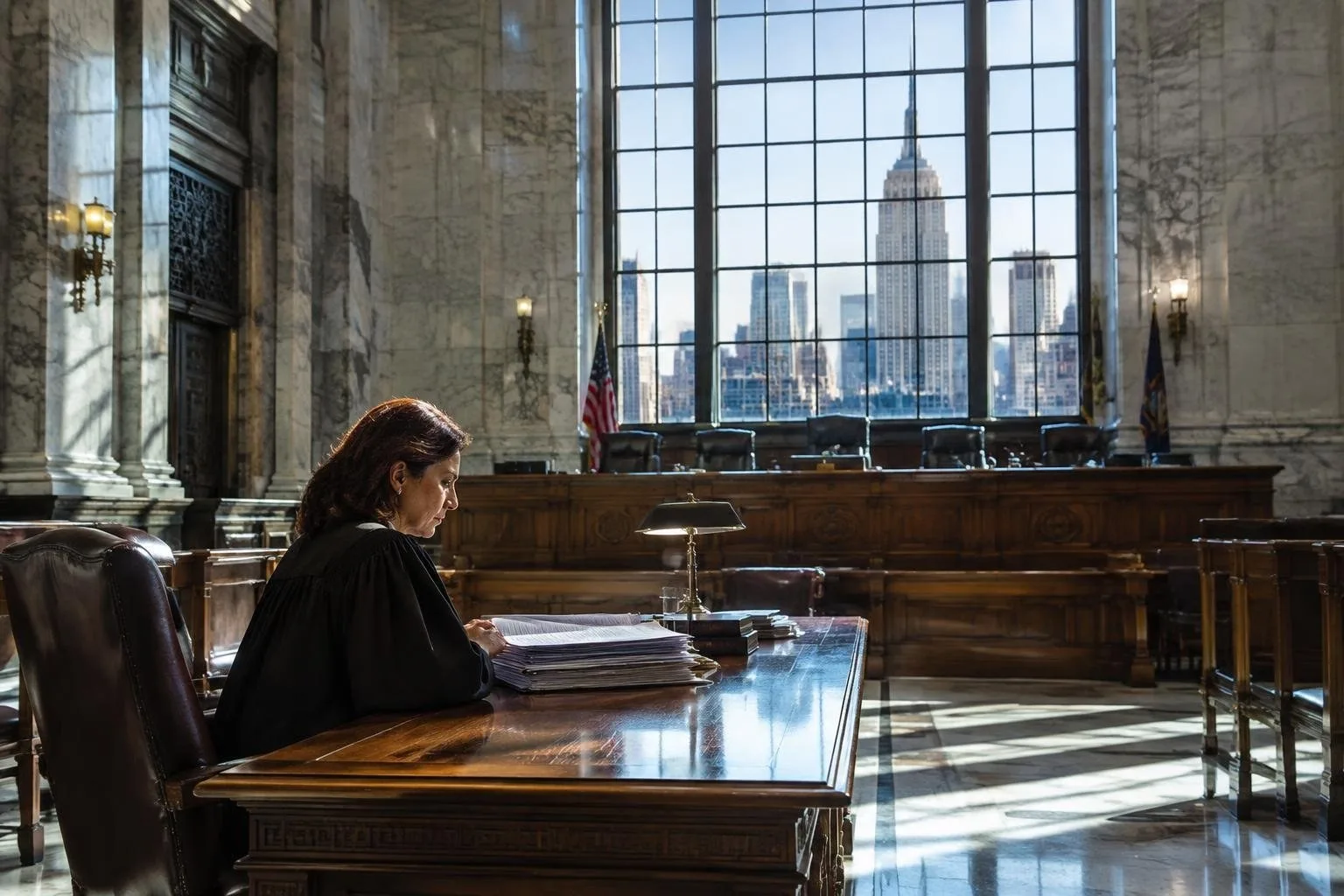
The New York Appellate Division’s Second Department delivered a decisive ruling on Wednesday, effectively preserving Mayor Zohran Mamdani’s contentious surcharge on luxury secondary residences. The four-justice panel reversed a September decision from Richmond County that had forced the city to pause the rollout, declaring that the plaintiffs “lack standing” because they could not demonstrate a concrete, personal injury. The judgment authorizes the Department of Finance to resume preparing tax bills ahead of the November 15 mailing deadline, cementing the city’s ability to collect the levy on qualifying properties.
Under the newly affirmed framework, the second-home tax targets non-primary dwellings in New York City whose assessed market values meet specific thresholds: $5 million for one- to three-family houses and $1 million for condominium or cooperative units. The surcharge, introduced by state legislation in May, is slated to run from July 2026 through July 2028. Approximately 17,000 owners received notices in July, informing them that their properties fell within the tax’s scope. The appellate court concluded that merely receiving such a notice does not constitute an injury, as the communication serves an informational purpose rather than a punitive one.
The appellate decision and its broader implications
The court’s analysis hinged on the legal concept of standing, which requires plaintiffs to show a direct, personal harm—an “injury-in-fact”—to pursue a lawsuit. The judges found that the plaintiffs’ claim of “mass confusion” was too vague and fleeting to satisfy this threshold. By emphasizing that the Department of Finance’s roll of market values is a public record and that owners can contest their residency status through established procedures, the judges reinforced the legislative intent that the tax should operate without a preliminary burden on homeowners to prove primary residency.
Mayor Mamdani welcomed the decision, describing it as a “heartening” affirmation that the city will not be derailed by endless legal maneuvers. He noted that wealthy individuals have historically exploited every legal avenue to avoid taxation, and the ruling marks a significant victory for his administration’s revenue agenda. While the mayor’s office declined to comment further, the decision clears a major procedural obstacle, allowing the city to move forward with billing and collection efforts.
Background: the luxury second-home surcharge
The surcharge—often dubbed the “pied-à-terre tax”—was crafted to address concerns that affluent owners keep high-value properties vacant or use them sparingly, thereby limiting housing availability for residents. By imposing a tax on properties that are not the owner’s primary residence, the city aims to generate additional revenue and discourage speculative ownership. The tax applies to a wide array of dwelling types, including single-family homes, townhouses, co-ops, and condos, as long as they exceed the stipulated market-value thresholds.
Critics argue that the measure could disincentivize investment in the city’s real-estate market, while supporters contend that it levels the playing field and funds essential services. The legislation explicitly permits owners to submit evidence of primary residency to claim an exemption, a provision the appellate court affirmed as consistent with state law. This means that even if a notice is initially sent, owners retain the right to contest the tax assessment before any payment is demanded.
Legal standards for standing and the lower-court rulings
In September, State Supreme Court Justice Wayne Ozzi had sided with the homeowners, finding that the city’s practice of placing the burden of proof on owners was unlawful. He ordered the Department of Finance to halt the issuance of notices and to remove an online database containing roughly 900,000 property entries. Notably, Justice Ozzi’s decision did not strike down the tax itself; it focused on the procedural aspects of how residency status was being verified.
The appellate panel, however, interpreted the statutory scheme differently. It held that the legislature anticipated a “catch-all” notice system that might reach some owners who ultimately qualify for an exemption, and that the law expressly allows those owners to submit proof of primary residency. By framing the issue as a matter of procedural adequacy rather than substantive invalidity, the court preserved the tax’s core structure while dismissing the standing claim.
Ongoing litigation and future outlook
Although the appeals decision resolves the immediate procedural dispute, two separate lawsuits challenging the constitutionality of the surcharge remain active in lower courts. These cases argue that the tax violates equal-protection principles and imposes an impermissible burden on non-resident owners. The outcomes of those challenges could still reshape the tax’s implementation, but for now, the city is authorized to proceed with billing the identified properties.
Stakeholders across Brooklyn, Manhattan, and the outer boroughs are closely watching the developments. Property owners with high-value secondary residences must now assess whether they meet the exemption criteria and be prepared to submit supporting documentation. The Department of Finance has indicated that it will continue to issue tax bills according to the November 15 schedule, and any further legal impediments will likely arise from the pending constitutional challenges.