

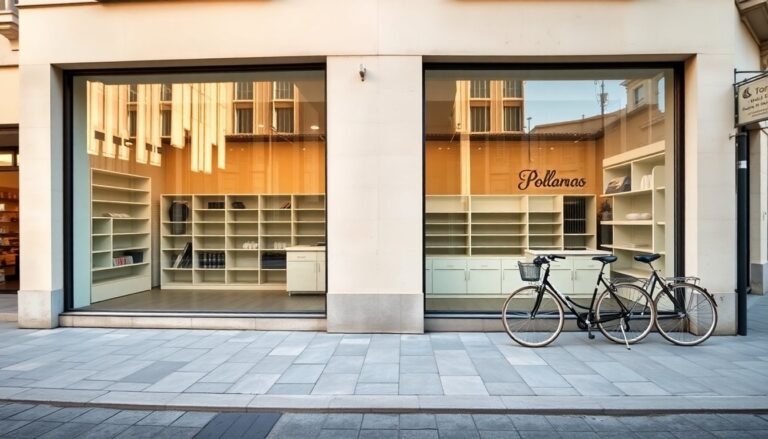
Central Sassari retail unit — 100 sqm (listed 25/02/2026)
Overview A compact, two‑storey commercial unit in the heart of Sassari is now available. Roughly 100 sqm in total, the property benefits from two street-facing facades on Via Rolando and Via Sardegna — a practical
advantage for businesses that rely on passersby and window displays. The listing went live on 25 and will suit buyers or operators who want a highly visible location with flexible internal arrangements.
What the layout gives you The building’s two-level plan naturally separates customer-facing space from support areas. The ground floor offers immediate retail access and generous display frontage; the upper floor can
be used for storage, staff rooms, offices or extra seating depending on the operator’s needs. Two façades do more than increase display space: they improve sightlines, create alternative entry points and make phased fit-outs or partial occupation easier — useful whether you’re running a boutique, café or multi-purpose concept.
Practical advantages and fit‑out considerations – Visibility and merchandising: Dual storefronts capture traffic from two directions and
boost the chance of spontaneous visits. – Operational resilience: Separate entrances and floors reduce single-point failure during maintenance or renovation and open options for subletting or staggered occupancy. – Adaptability: The upper level can be adapted as storage, back‑office space or additional customer area, letting you evolve the use as demand changes.
Before signing, confirm permitted uses, safety certifications and accessibility compliance. Local zoning and building regulations will shape the scope, timeline and cost of any fit‑out — factor those into your projections.
Local context: safety, footfall and market reaction Although centrally located, the unit’s commercial potential ties closely to the neighbourhood’s social dynamics. Recent isolated public‑safety incidents have reduced evening foot traffic and shifted peak trading toward daytime hours. Such episodes often trigger municipal responses — better lighting, more CCTV and increased patrols — which can restore confidence if they are prompt and visible.
Market participants are responding cautiously: tenants now scrutinise security arrangements, insurers demand clearer risk information, and lenders may build these considerations into yield assumptions and covenants. A recent, highly publicised policing incident in the province (an arrest followed by house arrest in Sassari) illustrates how a single event can ripple through local sentiment, even if the underlying problem is not directly related to retail activity.
Due diligence checklist for security‑sensitive locations – Collect objective data: request police reports, monthly incident logs and official pedestrian counts. – Visit at varied times: mornings, evenings and weekends to see real patterns. – Speak with neighbours: talk to adjacent shopkeepers and building managers about customer flows and staff concerns. – Review policy and contract terms: check insurance history, security‑related lease clauses and tenant exit provisions. – Budget for mitigation: estimate costs for lighting, access control, alarms and visible security staff, and include these in yield calculations. – Keep records: document inspections, conversations and decisions for lenders and regulators.
Broader demand drivers: demographic trends in Sardinia Longer‑term demographic shifts across Sardinia are reshaping demand for retail space. SVIMEZ data (2002–2026) highlights a sustained outflow of young graduates from southern regions — roughly 350,000 people under 35 and a net population decline of about 270,000 in that period. The report estimates an annual opportunity cost near €6.8 billion and notes over 63,000 graduates emigrated abroad.
Fewer young professionals affects daytime footfall and reduces demand for higher‑end F&B, speciality retail and co‑working formats that rely on skilled, disposable‑income customers. Even modest changes in graduate retention can alter absorption rates and long‑term cashflows, so factor regional demographics into your leasing and repositioning plans.
Combine site visits at different times, thorough checks on zoning and safety compliance, and a realistic budget for any security or fit‑out work to form a well‑rounded view before committing.