During the first ten months of 2026, law-enforcement agencies intensified their presence across northern Italy. In the Piedmont towns of Omegna and Belgirate, the Carabinieri disrupted a network of individuals equipped with burglary implements, while in the province of Bolzano the Agenzia provinciale per l’edilizia abitativa launched a sweeping inspection campaign that uncovered illegal short-term rentals.
The two operations, though distinct, share a common purpose: protecting citizens’ property and preserving housing stock intended for permanent residents.
Armed burglary ring uncovered in Omegna and Belgirate
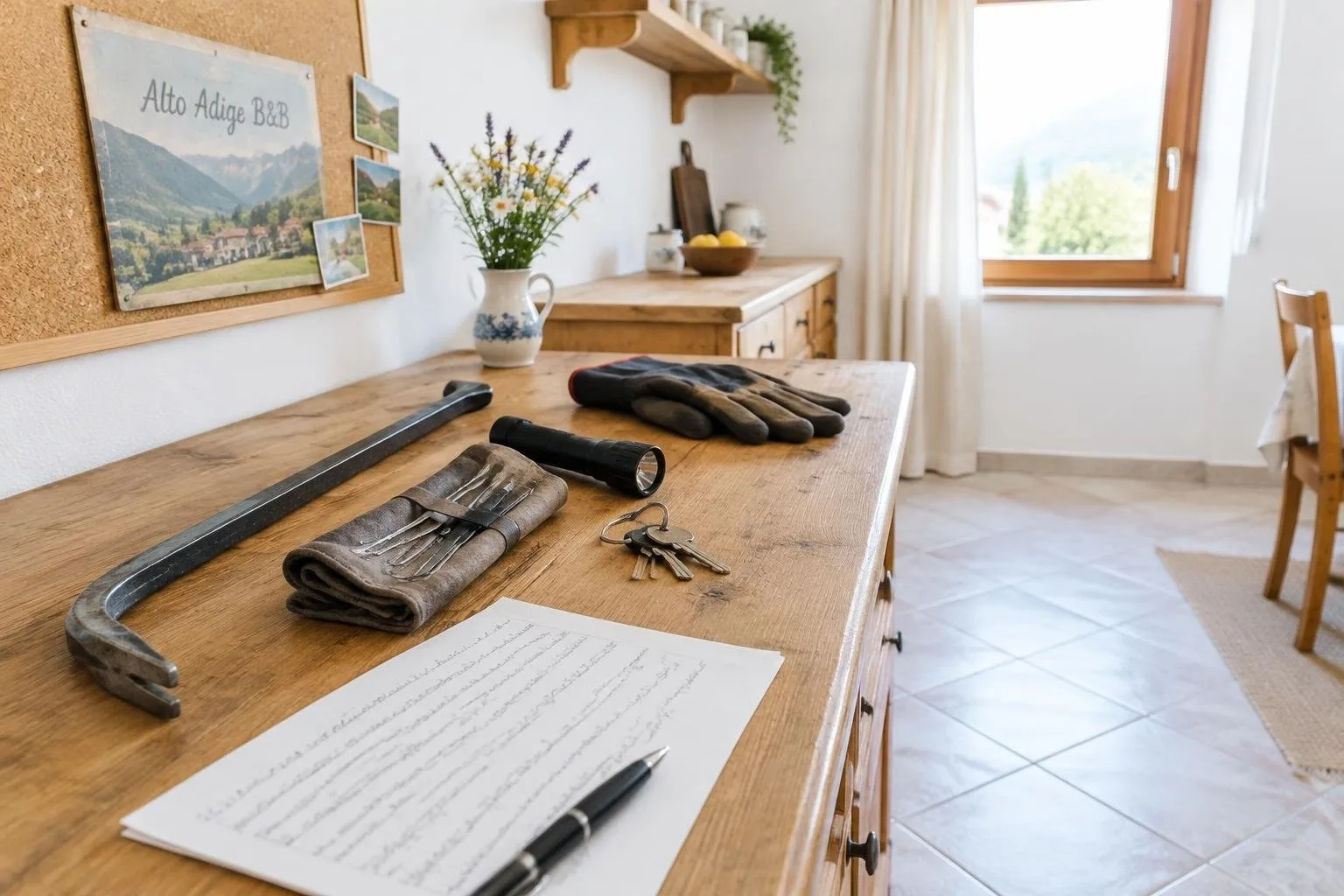
Patrolling near Omegna’s railway station, Carabinieri officers noticed suspicious activity around two parked cars. A routine check revealed a folding knife in the driver’s vehicle (a 47-year-old man) and, in the car of a 38-year-old driver, an axe, a steel crowbar, a pry bar and a screwdriver. The latter driver displayed clear signs of substance use; a saliva test confirmed drug consumption, leading to the immediate suspension of his driving licence.
In Belgirate, a distress call about an ongoing theft prompted the Stresa Carabinieri station to intercept a fleeing vehicle. Inside, three men of foreign origin, aged between 37 and 39, could not justify their presence. Police seized a cache of burglary tools, materials for falsifying documents, and several high-value items – including premium wine bottles and silver artefacts – that matched the loot from a robbery reported earlier that evening. The seizure linked the three suspects to the act of recipitation, confirming their role in the illegal handling of stolen goods.
Alto Adige crackdown on illegal B&B conversions
From 1 January to 31 October 2026, the provincial housing agency inspected more than 1,200 dwellings subject to public-sector constraints. The audit identified five cases where subsidised homes were being rented out as unauthorised tourist B&Bs. Under the Riforma Abitare 2025, such violations attract penalties of up to €30,000 per offence.
The operation generated 154 formal notices – a 70 % rise compared with the previous year. In total, 107 inspected properties were found completely vacant, 24 housed occupants who did not meet legal eligibility criteria, and seven landlords had exceeded the provincially-set rent ceiling. Among the socially-assisted housing units, 16 irregularities were recorded for non-compliant uses.
Provincial housing assessor Ulli Mair explained the surge: “L’intensificazione dell’attività di controllo da parte dell’Agenzia, la stretta collaborazione con la Guardia di finanza e le sanzioni notevolmente inasprite stanno dando i loro frutti.” She added that the ultimate goal is to keep newly built homes dedicated to residents, preventing them from being diverted to the short-term tourist market.
Impact and future outlook
Combined, the two investigations illustrate how coordinated action between the Carabinieri, the Guardia di Finanza and regional housing bodies can yield tangible results. Seizures of burglary equipment and the imposition of severe fines serve as a deterrent, while the heightened inspection regime aims to safeguard the limited housing supply for the local population.
With the housing shortage in Alto Adige worsening, officials stress that maintaining a 100 % conversion rate for new construction – as mandated by the 2025 reform – is essential to curb the growth of illegal short-term rentals and protect Affordable housing for residents.