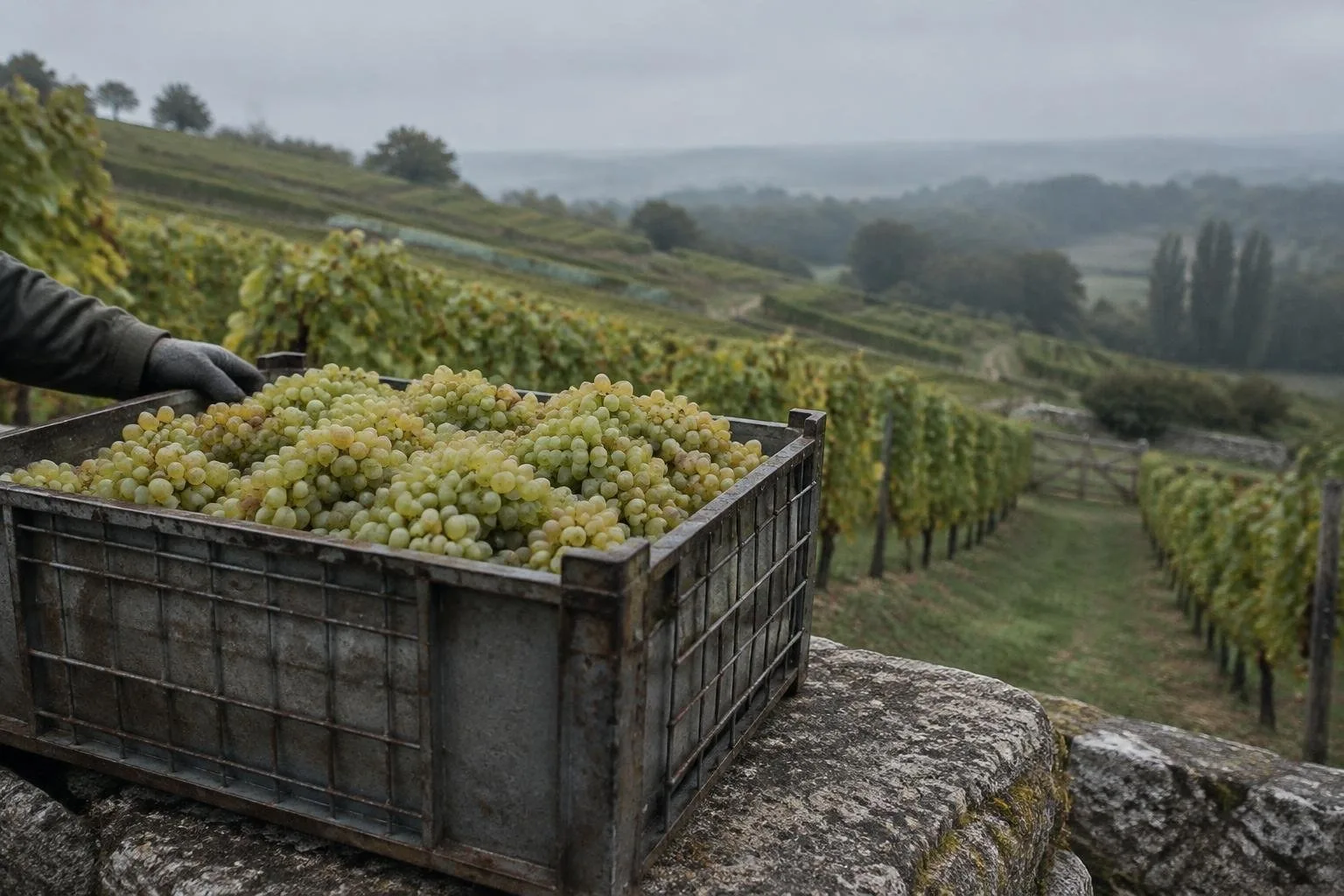
Although it is too early to judge whether 2026 will be remembered as a notable year for vintage Champagne, the harvest has already been called exceptional in the France-based region. The first reason is the quality of the grapes gathered across the whole area. Mathieu Roland-Billecart, a 7th-generation member of the family and chief executive of Champagne Billecart-Salmon, said that “The quality is fantastic, thanks to a very sunny and dry year”. He added that “There is absolutely no rot.” and that “This year was completely disease-free, like we have never seen before.”
The second reason follows from the first. The sunny, dry year brought one of the hottest summers on record and the earliest harvest recorded in Champagne so far. French authorities responded by temporarily raising the alcohol limit for the 2026 vintage from 13 percent to 15 percent. The Comité Champagne approved the amendment because exceptionally high sugar levels in the grapes pointed to wines with higher potential alcohol.
A difficult season with strong grapes
Output was cut almost in half by spring frosts, summer drought and heat, but the quality of what was picked is widely praised. Lori Russo, director of the Bureau du Champagne USA, the official United States representative of Champagne winegrowers and producers, said that “The alcohol, acidity, and pH levels in the grapes from the 2026 harvest are similar to the legendary vintages from 1921, 1947, and 1959”. Russo described 2026 as the most atypical growing season the region has ever seen. A spring frost affected almost 40 percent of the vineyards, early flowering was followed by five summer heatwaves, and ripening was so rapid that the harvest opened earlier than in any year since the 1890s.
Russo also said that “Anyone who knows the history of Champagne knows that the region is incredibly resilient, and this year was no exception”. According to her, growers reorganised their plans, and some producers cut short their August holidays to make sure the harvest, which is done entirely by hand in Champagne, was completed.
Higher sugar, lower acidity and winery adjustments
The high temperatures and fast ripening raised sugar levels, which can lead to higher alcohol in the finished wine. Rémi Vervier, chief executive and oenologist at Champagne Palmer & Co, explained that “Warmer growing conditions can lead to higher natural alcohol levels, bringing greater richness, concentration and aromatic intensity to Champagne.” He added that “However, they can also reduce acidity, making it essential to preserve the freshness, precision, and balance that define our style.”
Russo said that a small number of wines from this harvest could reach between 13.1 and 13.2 percent alcohol by volume, well below the 15 percent ceiling. She said the change “will not impact the sensory characteristics, quality, or style of the wines”. Vervier said the houses adapted their winemaking, using gentle pressing to avoid excessive phenolics, very precise débourbage, which is natural clarification through rest and settling, and cool fermentations to keep aromatic freshness. He also said that yeast selection and malolactic fermentation can be adjusted to preserve freshness and balance.
The temporary measure is not a sign of a permanent change to the permitted alcohol limit, according to the material. Billecart-Salmon has converted all its vineyards to organic or biodynamic farming and does not use weedkillers, in order to strengthen the root systems of the vines. Russo said that the Champagne industry has invested in research and adaptation to climate change for more than 40 years, and that the region was the first wine region in the world to assess its carbon footprint, in 2002 to 2003. Vervier said that “All indications suggest that 2026 could give rise to wines of remarkable intensity”, while Russo said that “we are confident there will always be Champagne”.